

Jaipur: In a major push toward transparent and technology-driven governance, the Rajasthan government is preparing to deploy an advanced Artificial Intelligence (AI)-based monitoring system to track financial transactions and implementation of government schemes in real time.
The initiative aims to prevent financial irregularities, budget manipulation, and misuse of public funds across hundreds of welfare and development schemes operating in the state.
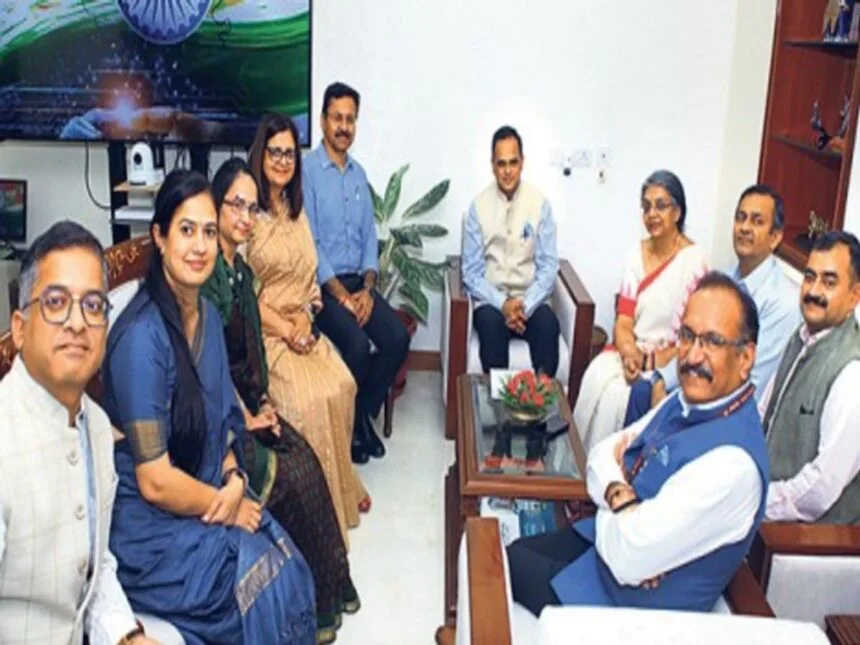
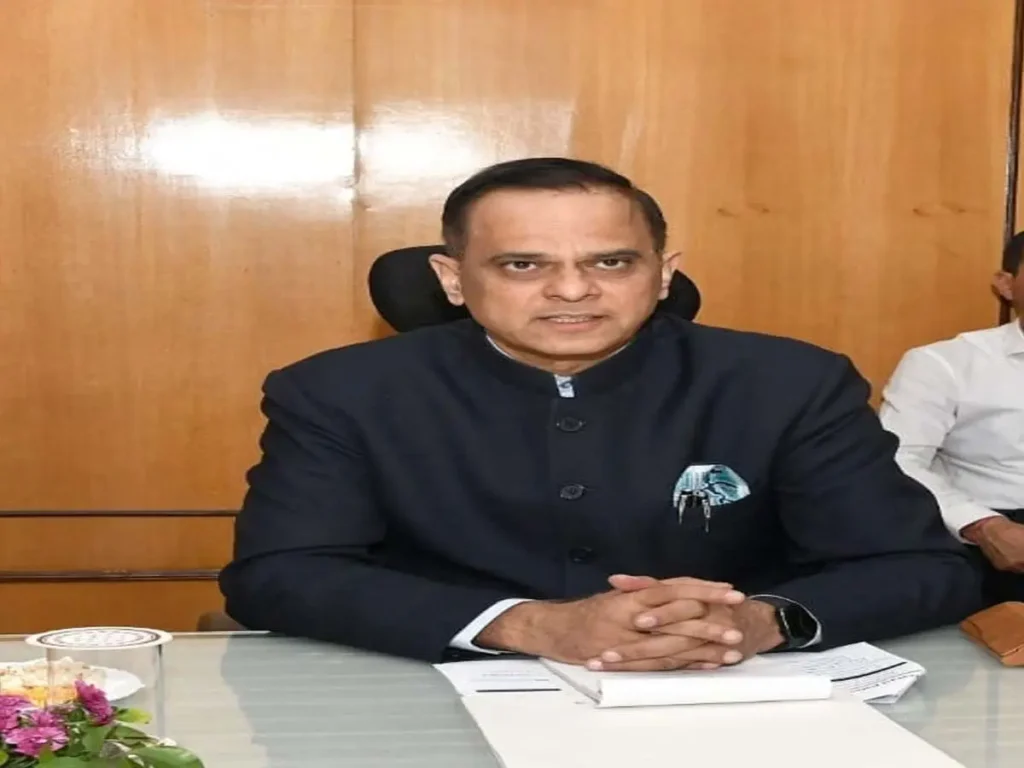
The decision was taken during a high-level meeting held in Jaipur on Tuesday, chaired by V. Srinivas, where a delegation from the office of the Controller General of Accounts under the Union Ministry of Finance reviewed Rajasthan’s financial management systems and future digital integration plans.
AI Dashboard to Monitor 230 Schemes in Real Time
Officials confirmed that an advanced AI-powered dashboard will be developed for continuous monitoring of financial transactions linked to a total of 230 government schemes.
The proposed platform will integrate data from the Public Financial Management System (PFMS) and the Integrated Financial Management System (IFMS), enabling authorities to detect anomalies, suspicious transactions, delays, or irregular spending patterns instantly.

During the meeting, TCA Kalyani explained that under the “Adjusted System Integration Fast Transfer” framework, Rajasthan has already integrated:
- 70 Centrally Sponsored Schemes
- 160 State Government Schemes
into the unified financial monitoring architecture.
The AI dashboard will reportedly be customized according to Rajasthan’s administrative and financial management requirements and is expected to provide real-time analytical oversight to senior officials.
Focus on Transparency and Accountability
The move is being viewed as a significant step toward improving accountability in public expenditure management.
Officials believe AI-based tracking can help reduce fraudulent transactions, unauthorized fund diversion, duplicate payments, delayed utilization, and manipulation in scheme implementation.
Sources said the dashboard may also include predictive analytics and automated alert systems to flag unusual financial patterns before losses escalate.
The system is expected to strengthen financial discipline at both departmental and district levels.
PFMS Handles Massive Financial Volume
During the review meeting, Chief Secretary V. Srinivas highlighted the growing importance of the Public Financial Management System (PFMS) in India’s economic and administrative framework.
He stated that a significant portion of the country’s GDP-linked financial flows now move through the PFMS platform.
Key Figures Shared During the Meeting
- More than 327 crore transactions were processed through PFMS in the previous year.
- The system is currently linked to:
- Over 1,100 Direct Benefit Transfer (DBT) schemes
- More than 35 lakh implementing agencies nationwide.
Officials said the increasing scale of digital financial governance requires smarter systems capable of handling large volumes of data securely and efficiently.
Financial Systems to Become More Flexible and User-Centric
TCA Kalyani emphasized that future financial governance systems must become more modern, simplified, flexible, and user-oriented to meet the evolving administrative and economic challenges of the coming decade.
She noted that digital integration and AI-driven monitoring are now essential for ensuring efficient utilization of public money and maintaining transparency in welfare delivery systems.
The discussions also focused on strengthening coordination between state-level treasury systems and central financial platforms.
Training Planned for Treasury Officers Across Rajasthan
To ensure smooth implementation of the upgraded system, the Rajasthan government has also initiated plans for extensive capacity-building exercises.
Chief Secretary V. Srinivas directed officials to organize specialized workshops and training programs for treasury officers from all 41 districts of Rajasthan in collaboration with the Central Government.
These training sessions will focus on:
- AI-enabled financial monitoring
- Advanced PFMS operations
- Digital transaction oversight
- Fraud detection mechanisms
- Real-time reporting systems
Officials believe strengthening technical expertise at the district level will be crucial for successful adoption of the new AI-driven governance model.
Rajasthan Aims for Technology-Based Fiscal Reforms
Administrative experts see the initiative as part of Rajasthan’s broader effort to modernize governance through digital reforms and data-driven decision-making.
If implemented effectively, the AI dashboard could become one of the state’s most powerful tools for monitoring public expenditure, identifying financial leakages, and improving efficiency in welfare delivery.
The development also reflects the growing role of artificial intelligence in public administration and financial governance across India.