

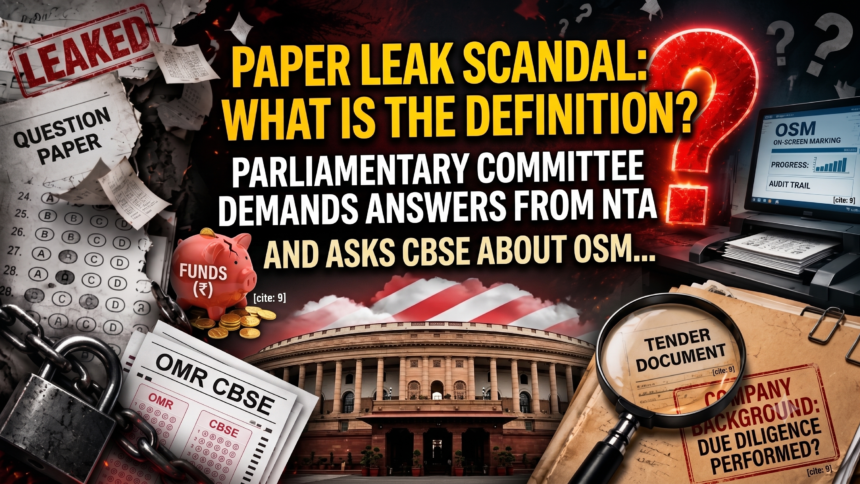
NEW DELHI — In a major escalation of scrutiny over India’s national examination systems, the Parliamentary Standing Committee on Education has launched a dual-pronged probe into recent academic controversies. The panel has demanded that the National Testing Agency (NTA) formally define what constitutes a “paper leak” and sharply questioned the Central Board of Secondary Education (CBSE) over alleged due diligence failures in awarding its multi-million rupee digital evaluation contract.
The committee, chaired by veteran leader Digvijaya Singh, has sought comprehensive, written explanations from both elite educational bodies. The high-level intervention follows mounting political pressure, student protests, and allegations of systematic institutional irregularities.
NTA Under Fire: Defining the Anatomy of a Leak
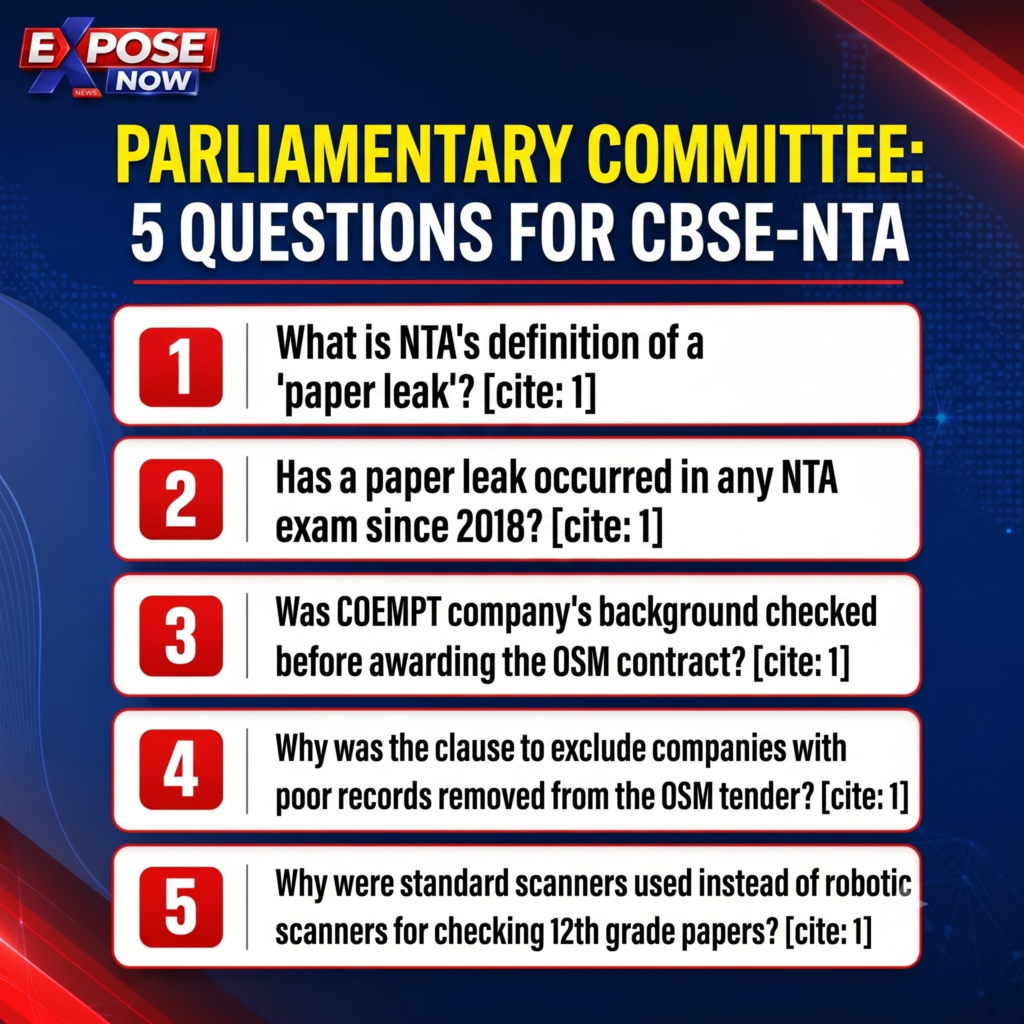
The panel has presented a tough questionnaire to the NTA, demanding absolute clarity on structural vulnerabilities. Crucially, the committee has asked the testing agency to explicitly define the legal and operational parameters of a “paper leak”.
Additionally, the NTA has been directed to disclose:
- Every reported instance of paper leaks or integrity compromises across all national competitive exams conducted under its watch since 2018.
- Detailed accounts of any internal, independent inquiries conducted into the massive NEET-UG 2024 irregularities, separate from the ongoing Central Bureau of Investigation (CBI) probe.
- Complete data on its internal staff strength, fresh recruitments made since 2022, and compliance reports concerning the High-Powered Expert Committee’s recommendations on systemic overhauls.
The CBSE-OSM Controversy: Diluted Tenders and Shady Backgrounds?
Simultaneously, the Parliamentary panel has turned its focus on the CBSE’s controversial On-Screen Marking (OSM) system, which recently left hundreds of thousands of Class 12 students vulnerable to severe evaluation errors and technical glitches.
More Read

The committee has demanded a complete record of successive Requests for Proposals (RFPs) issued by the CBSE. The inquiry specifically targetted the relaxation of vital tender parameters that allegedly favored Hyderabad-based COEMPT EduTeck Pvt Ltd over industry giants like TCS.
Key Questions Raised by the Parliamentary Committee to CBSE:
- The Globarena Link: Was the CBSE aware that COEMPT EduTeck and its current directors were closely tied to Globarena Technologies—the blacklisted firm responsible for the tragic 2019 Telangana Intermediate examination software disaster? If so, why was it completely overlooked?
- Weakening of Penalty Clauses: Why was a strict clause disqualifying bidders with a past track record of “poor performance” entirely removed in the final RFP?
- Altering Blacklist Mandates: Why was the language modified to ban only “currently blacklisted” vendors rather than those with prior blacklisting histories?
- Relaxing Infrastructure Standards: Why did the tender parameters shift from requiring vendors to own a proprietary data center to allowing third-party, cloud-based infrastructure?
The panel also sought immediate clarification on why critical feedback and warning signs highlighted by institutional observers during initial OSM dry-runs were entirely buried rather than flagged to the Union Ministry of Education.
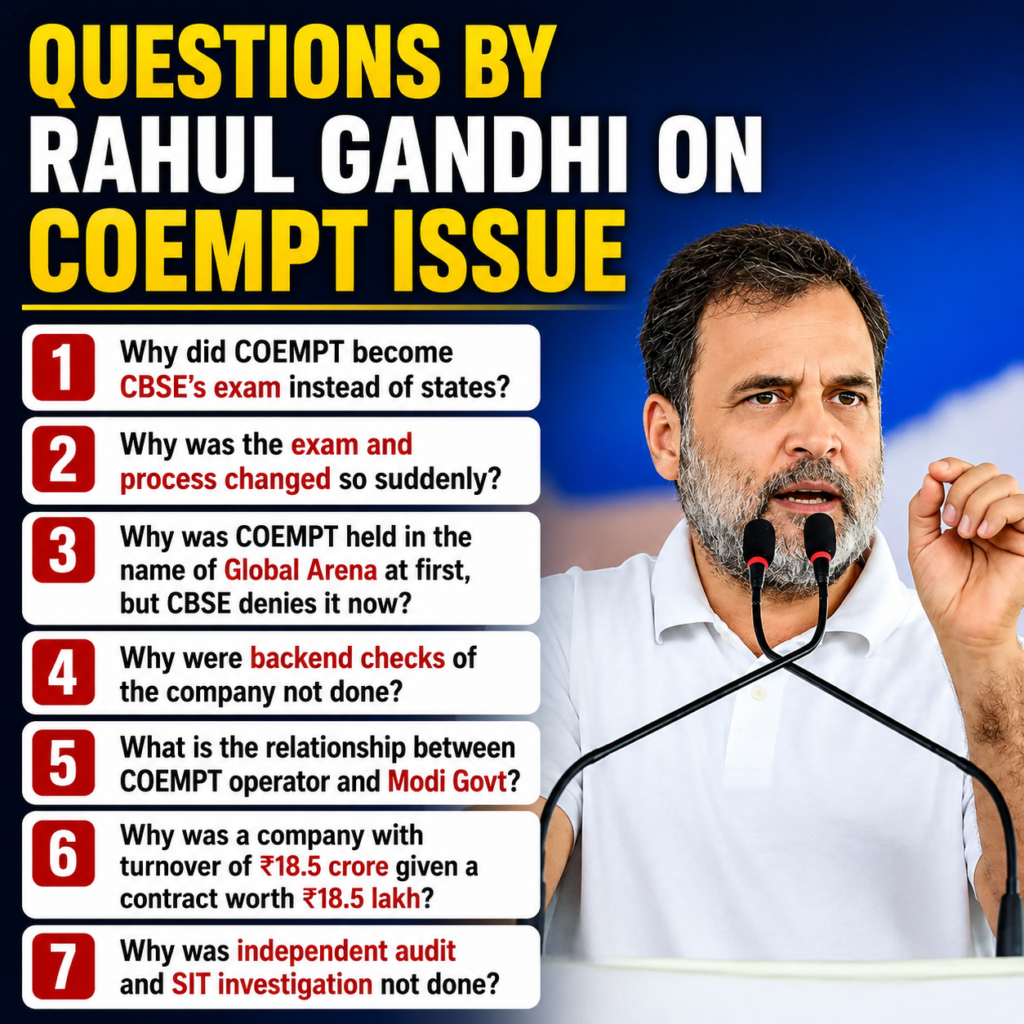
“Rahul Gandhi’s Questions on COEMPT”
More Read

Deadlines and Accountability
While the CBSE was ordered to submit its detailed response immediately, the NTA has been given a final window to submit its parameters and internal records.
With demands for the resignation of Union Education Minister Dharmendra Pradhan intensifying, the panel’s upcoming investigative findings are expected to heavily impact how competitive and board examinations are governed in India moving forward.