

In a major move aimed at strengthening the legal framework against paper leaks, organised cheating and other unfair practices in competitive and public examinations, the Central Government on Monday introduced the Public Examinations (Prevention of Unfair Means) Amendment Bill, 2026 in the Lok Sabha.
The proposed legislation comes amid continuing concerns over the integrity and transparency of competitive examinations, including the ongoing controversy surrounding the NEET-UG examination. The issue of paper leaks and alleged irregularities in recruitment and entrance examinations has emerged as a major concern for students, candidates and educational institutions across the country.
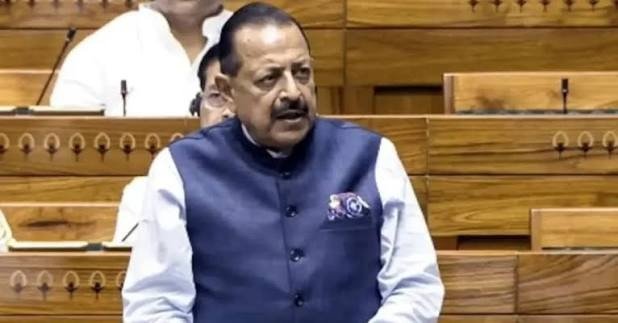
The amendment bill was introduced in the Lok Sabha by Union Minister Jitendra Singh. However, proceedings in the House were disrupted by protests from Opposition MPs, following which Lok Sabha Speaker Om Birla adjourned the proceedings until 2 pm.
Proposed Amendments to Existing Public Examinations Law
The proposed legislation seeks to amend the Public Examinations (Prevention of Unfair Means) Act, which was enacted to prevent unfair practices in public examinations and strengthen action against those involved in examination-related fraud.
The government is seeking to further strengthen the existing legal framework in response to growing concerns over organised paper leak networks, cheating syndicates and other forms of examination malpractice.
More Read

The proposed amendments are aimed at making the investigation and prosecution of such cases faster and more effective, while ensuring that those responsible for compromising examination systems face stringent legal consequences.
Fast-Track Courts Proposed for Paper Leak Cases
One of the key proposals highlighted in the amendment is the establishment of fast-track courts for speedy hearings of cases related to paper leaks and examination malpractices.
The objective is to prevent such cases from remaining pending for years and to ensure that accused persons face timely judicial proceedings.
More Read

Paper leaks often involve organised networks that may include multiple individuals operating at different levels. Delays in investigation and prosecution can make it difficult to establish accountability and may weaken the deterrent effect of existing laws.
The proposed fast-track mechanism is therefore intended to accelerate judicial proceedings in cases involving serious examination-related offences.
Two-Month Deadline Proposed for Investigation
The amendment bill also seeks to introduce a time-bound investigation mechanism for paper leak cases.
Under the proposed framework, investigations into paper leak-related offences are expected to be completed within two months. The objective is to ensure that investigating agencies do not take prolonged periods to complete investigations and that prosecution proceedings can begin at the earliest possible stage.
A fixed timeline could potentially help authorities respond more quickly to examination fraud, identify the individuals involved and establish the larger networks behind organised paper leaks.
However, the effectiveness of such a provision will depend on the availability of adequate investigative resources, coordination among agencies and the complexity of individual cases.
More Read

Stricter Action Against Organised Examination Fraud
The proposed amendments are aimed particularly at tackling organised examination malpractice.
Paper leaks are increasingly being viewed not merely as isolated incidents but as part of larger networks involving the illegal circulation of examination papers, impersonation, cheating and other unfair means.
The government has indicated that stronger legal provisions and faster prosecution are necessary to deter such activities.
The proposed framework focuses on three broad areas:
- Stricter legal action against those involved in examination malpractice
- Time-bound investigation of paper leak cases
- Faster judicial proceedings through dedicated or fast-track courts
Together, these measures are intended to strengthen the deterrence mechanism against organised examination fraud.
Bill Introduced Amid Opposition Protests
The bill was introduced amid disruptions in the Lok Sabha, with Opposition MPs raising concerns over issues related to student protests and alleged police action during demonstrations.
The Opposition has also been consistently raising questions over examination-related controversies and demanding greater accountability from the government.
The protests affected proceedings in the House, with the Speaker eventually adjourning the Lok Sabha until 2 pm.
The political confrontation comes at a time when examination reforms have become a major national issue, with students and candidates demanding greater transparency and stronger safeguards against paper leaks.
NEET Controversy Adds to Pressure for Examination Reforms
The proposed amendment has gained significance against the backdrop of controversies surrounding major competitive examinations, particularly NEET-UG.
The medical entrance examination has remained at the centre of intense public and political debate, with students and opposition parties demanding stronger mechanisms to ensure the credibility and transparency of examinations.
Candidates preparing for competitive examinations often invest years of preparation and significant financial resources. Any compromise in the examination process can therefore have serious consequences for students and their families.
The government has been under pressure to strengthen examination systems and prevent malpractice, particularly in examinations conducted on a large national scale.
Against this backdrop, the proposed amendments are being seen as an attempt to strengthen the legal response to paper leaks and other forms of examination fraud.
What Could Change If the Bill Becomes Law?
If the amendment bill is passed by Parliament and receives the necessary approvals, it could lead to significant changes in the way paper leak and examination malpractice cases are investigated and prosecuted.
The proposed system would place greater emphasis on:
Time-bound investigations: Investigating agencies would be expected to complete paper leak investigations within a specified period.
Faster trials: Fast-track courts could help reduce delays in judicial proceedings involving examination-related offences.
Stronger deterrence: Tougher legal provisions could increase the risks for individuals and organised groups involved in examination fraud.
Greater accountability: A more structured legal framework could help authorities identify and prosecute individuals responsible for compromising public examinations.
However, the actual impact will depend on how effectively the provisions are implemented. Fast-track courts would require adequate judicial infrastructure, while the two-month investigation deadline could require additional manpower and specialised investigative capabilities.
Implementation Will Be the Key Challenge
While the proposed amendments represent a significant attempt to strengthen the legal framework, experts and stakeholders are likely to closely examine how the provisions will work in practice.
Paper leak investigations can involve multiple states, digital evidence, financial transactions and large networks of accused persons. Completing complex investigations within a fixed period could be challenging unless investigating agencies have adequate resources and technical expertise.
Similarly, establishing fast-track courts across states would require coordination between the Centre and state governments, along with sufficient judicial infrastructure and personnel.
The success of the proposed law will therefore depend not only on legislative approval but also on effective implementation at the ground level.
Parliament’s Next Step Will Be Crucial
With the Public Examinations (Prevention of Unfair Means) Amendment Bill, 2026 now introduced in the Lok Sabha, its further parliamentary journey will be closely watched.
The government is likely to present the bill as an important step towards restoring confidence in the country’s examination system and strengthening action against paper leaks.
The Opposition, meanwhile, is expected to continue raising concerns over examination controversies, student protests and accountability in the education and recruitment system.
The parliamentary debate on the bill could bring renewed focus on several critical issues, including paper leak prevention, examination security, the role of investigating agencies, accountability of examination authorities and protection of students’ interests.
For millions of students and job aspirants across India, the effectiveness of any new law will ultimately be judged by whether it can prevent paper leaks before they occur and ensure swift action when examination integrity is compromised.
The proposed amendment, therefore, represents a potentially significant step in India’s broader efforts to reform public examinations. Its real impact, however, will depend on the strength of its final provisions, parliamentary scrutiny and, most importantly, effective enforcement on the ground.