

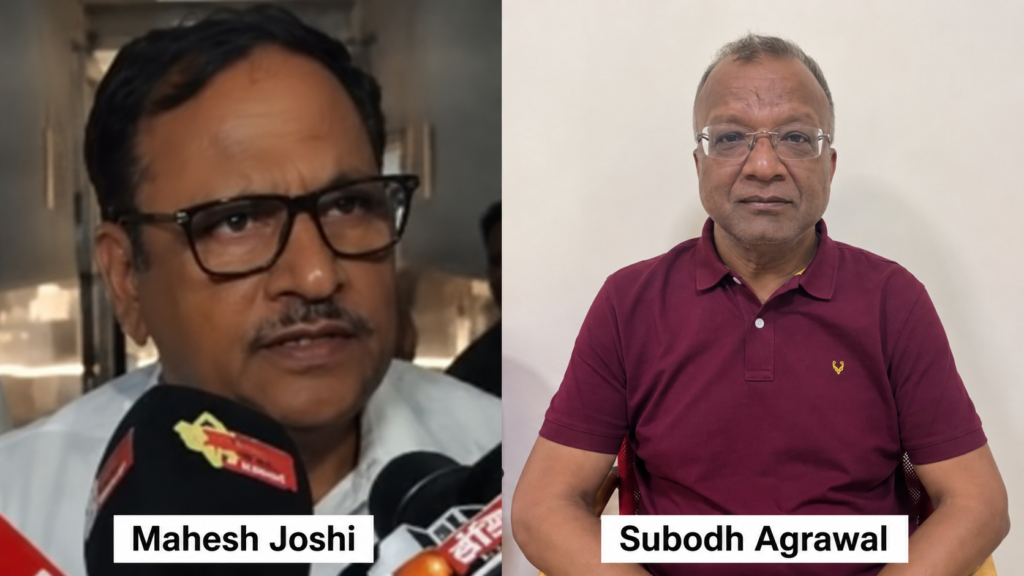
Former Minister Mahesh Joshi, Former IAS Officer Subodh Agarwal and 10 Others Arrested So Far
Alleged Key Players Sanjay Agrawal and Sanjay Badaya Still Beyond the Reach of the ACB
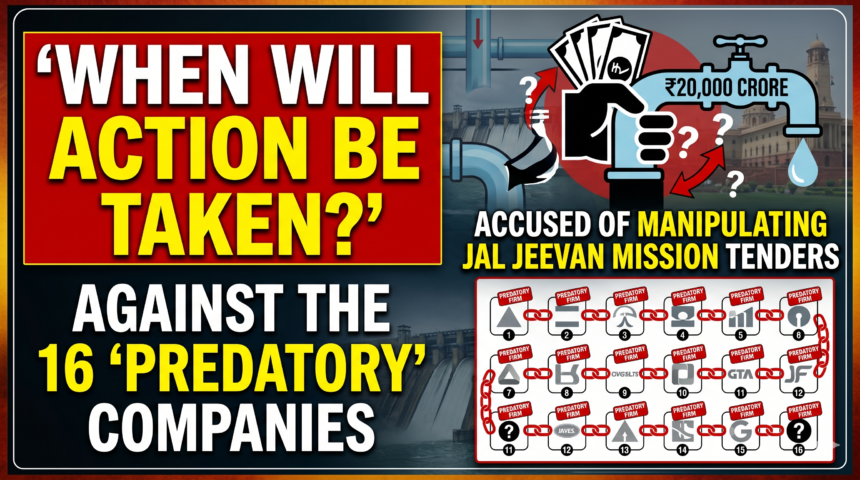
Jaipur: Rajasthan’s biggest alleged corporate corruption scandal linked to the Jal Jeevan Mission (JJM) has now triggered serious political and administrative tremors across the state. What was envisioned as a transformative rural drinking water mission has allegedly turned into one of the largest tender manipulation and financial conspiracy cases in Rajasthan’s history.
Investigations and disclosures surrounding the case suggest that a network involving politicians, bureaucrats, engineers, middlemen, and major infrastructure companies allegedly manipulated the tender process of projects worth nearly ₹20,000 crore under the Jal Jeevan Mission. Authorities suspect that collusive bidding, cartel formation, tender pooling, and commission-based allotments caused massive financial losses estimated at around ₹5,000 crore to the state exchequer.
So far, former Rajasthan minister Mahesh Joshi, former Additional Chief Secretary Subodh Agarwal, Chief Engineer Dinesh Goyal, contractors, company representatives, and several officials have been arrested in connection with the investigation. However, two alleged central figures — engineer Sanjay Agrawal and middleman Sanjay Badaya — continue to remain outside the direct reach of investigative agencies.
The Alleged ‘Pooling Model’ of Corruption
According to sources connected to the probe, the alleged scam was not a random case of irregularities but a highly organized system designed to eliminate fair competition in the tender process.
Investigators believe that several large infrastructure firms formed an alleged cartel to ensure that JJM tenders remained within a pre-decided syndicate. Through mutual understanding and bid management strategies, competition was allegedly neutralized, enabling companies to secure inflated contracts and favorable project allocations.
More Read

Major companies that have surfaced during discussions surrounding the investigation include:
- Larsen & Toubro (L&T)
- Megha Engineering and Infrastructures Limited (MEIL)
- Vishnu Prakash R Punglia Ltd.
- SPML Pvt. Ltd.
- OM Infra Ltd.
- DARA Engineering
- GA Infra
- GCKC Projects
- JWIL Infra
- NCC Pvt. Ltd.
- JMC Projects
- Lahoty Buildcon
- GVPR Engineering
- Jagadish Prasad Agrawal (JPA)
- Offshore Infrastructures
- Goodwill Advance Construction
Investigators are examining whether these firms, along with associated contractors and intermediaries, participated in tender pooling and coordinated bidding practices that allegedly distorted the procurement process.
Questions Over Delayed Blacklisting
The controversy has now intensified over why several companies allegedly linked to the irregularities have not yet been blacklisted or removed from government contracts.
More Read
Critics and sources connected to the investigation argue that despite serious allegations and ongoing criminal probes, decisive departmental action against the companies has remained slow. Questions are now being raised about whether institutional pressure, political influence, or bureaucratic protection is delaying punitive action.
Alleged Role of Engineer Sanjay Agrawal and Middleman Sanjay Badaya
According to sources, PHED engineer Sanjay Agrawal allegedly played a crucial role in legitimizing irregular decisions within official files and technical approvals. Investigators suspect that procedural clearances and tender-related documentation were manipulated to facilitate the alleged conspiracy.
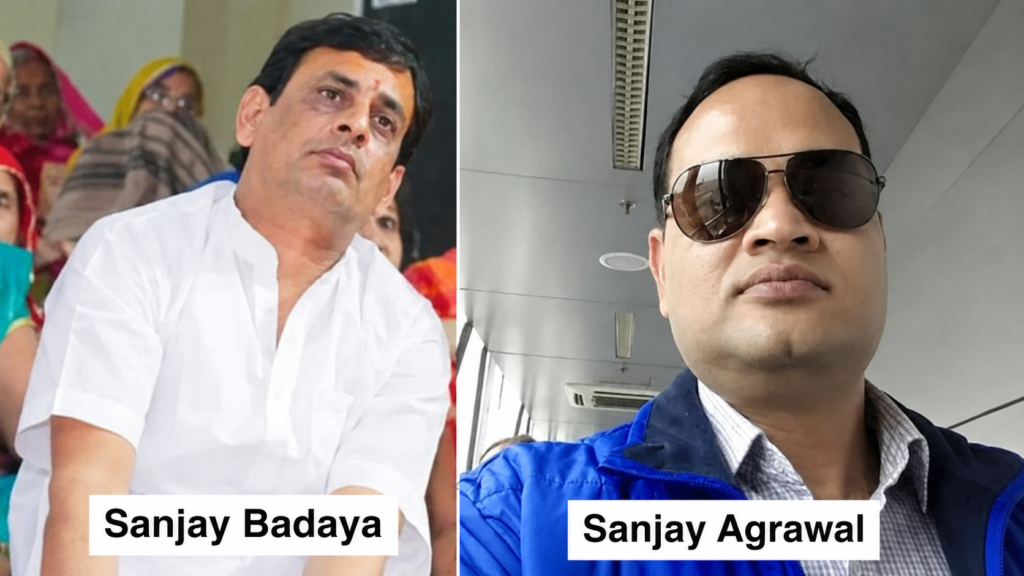
Meanwhile, Sanjay Badaya is believed to have acted as the primary intermediary between contractors, officials, and political circles. Agencies suspect he coordinated negotiations, financial arrangements, and communication channels between members of the alleged syndicate.
Officials are now examining transaction records, call details, tender approvals, and internal communications to establish the extent of the alleged network.
Did the Investigation Stop at Political Faces?
The Anti-Corruption Bureau’s investigation is also raising larger questions regarding political accountability and administrative protection at higher levels.
Sources indicate that investigators are examining whether approvals and clearances for several controversial projects originated from influential corridors within the former Chief Minister’s Office (CMO). Officials connected to the probe believe that a financial operation of this magnitude may not have been possible without broader institutional backing.
More Read
The investigation is expected to expand further as agencies analyze the role of senior officials, departmental committees, technical evaluators, and decision-making authorities involved in the approval process.
Impact on Rajasthan’s Rural Population
The alleged scam has had severe consequences for rural communities across Rajasthan. Despite thousands of crores allocated under the Jal Jeevan Mission, a significant portion of the state’s rural population still lacks proper tap water connectivity.
Experts and activists argue that if the alleged corruption and tender manipulation had not occurred, Rajasthan could have emerged as one of the leading states in successful implementation of the Jal Jeevan Mission.
Instead, delays, irregularities, contractor disputes, and alleged financial mismanagement reportedly weakened the execution of critical drinking water infrastructure projects across several districts.
Investigation Likely to Intensify
With arrests already made and several financial records under scrutiny, investigative agencies are expected to intensify action in the coming weeks. The focus may now shift toward corporate accountability, financial transactions, foreign connections, and the involvement of additional political and bureaucratic figures.
The scandal is increasingly being viewed not merely as a tender manipulation case, but as a major breach of public trust involving funds allocated for essential rural welfare infrastructure.