

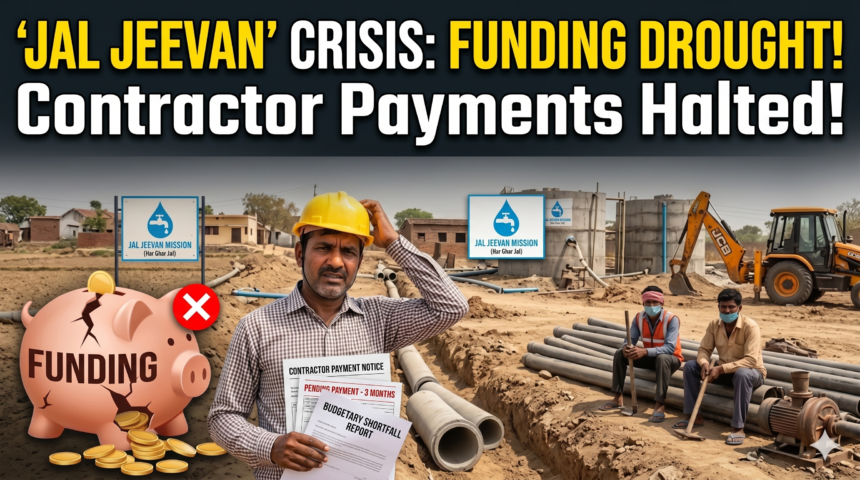
Jaipur: Rajasthan’s flagship drinking water initiative, the Jal Jeevan Mission (JJM), is facing a severe financial crunch due to delays in the release of central funds and the ongoing transition from the SNA system to the newly introduced SNA SPARSH portal. The budget bottleneck has significantly impacted the cash flow of contractors executing rural drinking water projects across the state, raising concerns over project delays and slowing physical progress.
In an effort to prevent critical water supply projects from stalling, the Finance Department and the Public Health Engineering Department (PHED) have jointly devised a temporary one-time financial relief mechanism aimed at easing liquidity pressures on contractors.
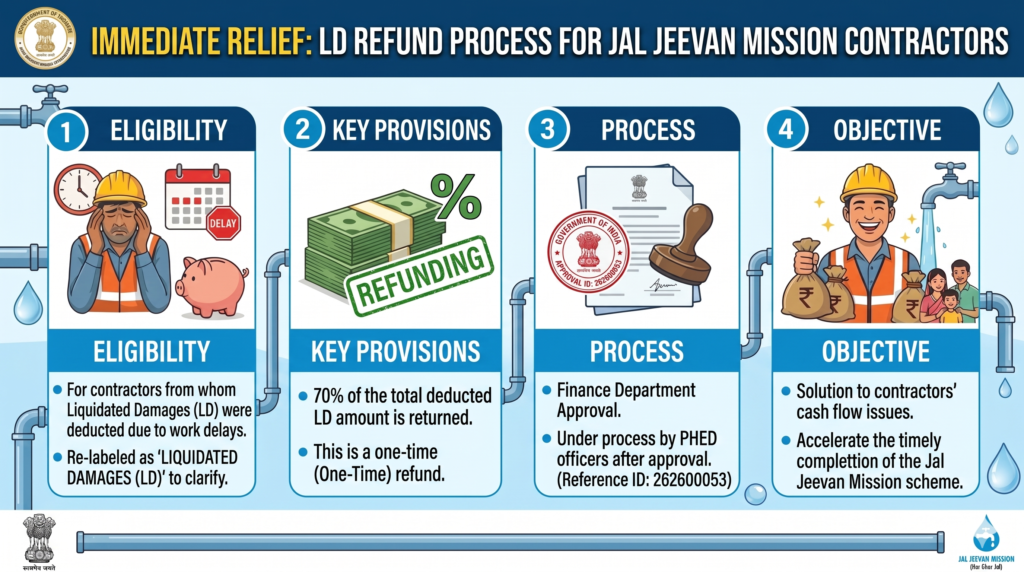
According to an order issued on June 3, 2026, by the Chief Engineer (JJM), contractors penalized for delays under Clause 2 of the General Conditions of Contract (GCC-PWF&AR) will receive a refund of 70 percent of the Liquidated Damages (LD) previously deducted from their payments.
The decision follows approval granted by the Finance Department through ID No. 262600053 dated May 29, 2026. Officials stated that since Jal Jeevan Mission is a public welfare scheme of critical importance, maintaining the pace of project execution is essential. The temporary relaxation has been approved primarily to address the acute liquidity crisis affecting contractors.
How the Relief Formula Works
Under the special arrangement, contractors whose payments were reduced due to delay penalties will be eligible for a one-time refund equivalent to 70 percent of the deducted LD amount.
More Read

However, the refund will be governed by strict financial and administrative safeguards to protect government interests.
Key Conditions for Availing the Refund
Refund Linked to Approved Running Bills
Only those contractors whose running bills have been certified by the Third-Party Inspection Agency (TPIA) and are currently available with divisional offices will qualify for the refund.
More Read

Limited to Available Payable Amount
The refund amount will be restricted to the lower of the following:
- Seventy percent of the Liquidated Damages deducted, or
- The net amount remaining in the contractor’s running bill after all statutory deductions such as GST, Income Tax, Performance Security, and other recoveries.
Mandatory Affidavit
Contractors will be required to submit a notarized affidavit on a non-judicial stamp paper of ₹500 declaring that they have no objection to the government recovering the refunded amount from their future TPIA-approved bills. The affidavit must also state that the contractor will not initiate any legal proceedings or claims against such recoveries.
Disputed Projects Excluded
Projects involving ongoing litigation, contractual disputes, arbitration proceedings, or cases where rescission of work orders is under consideration will not be eligible for any relief under this scheme.
More Read

Recovery Once Budget Becomes Available
PHED has clarified that the relief is purely temporary and intended to address immediate liquidity concerns. Once the first budget allocation is received in the coming months, the entire refunded amount will be recovered and deposited back into the designated Security Deposit V account, ensuring that there is no long-term financial loss to the state exchequer.
The Chief Engineer has directed all Additional Chief Engineers, Superintending Engineers, and Executive Engineers to ensure strict compliance with the order.
Concerns Over Funding and Project Timelines
The move highlights the growing financial pressures facing Rajasthan’s Jal Jeevan Mission. Delays in fund flow from the Centre, coupled with procedural changes in financial management systems, have disrupted payment cycles and affected contractor liquidity across several districts.
Officials believe the temporary refund mechanism will provide immediate working capital support, enabling contractors to continue project execution without major disruptions until regular budget allocations resume.
The development also underscores the challenges governments face in balancing financial discipline with the need to maintain momentum in large-scale public infrastructure and drinking water projects.