

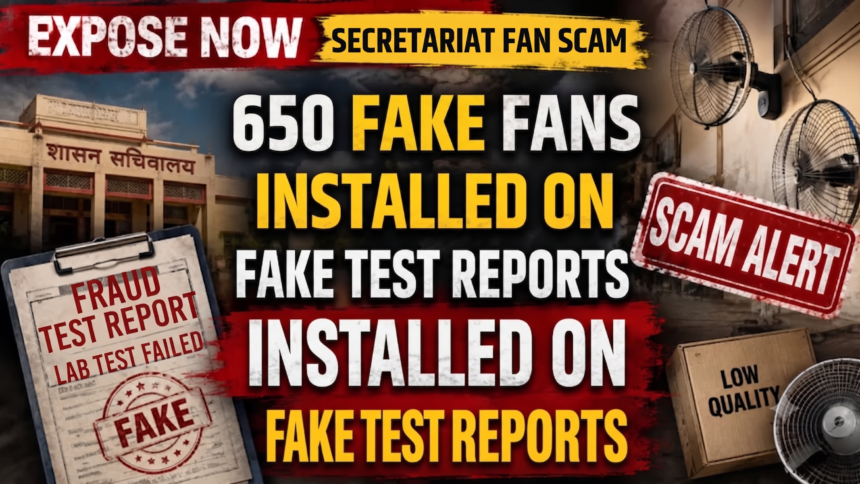
Jaipur: Fresh allegations regarding the procurement of ceiling fans for the Rajasthan Secretariat have sparked concerns over transparency, financial accountability, and procurement practices within the Public Works Department (PWD). The controversy has intensified after claims surfaced that the purchase process may have involved significant irregularities, prompting demands for an independent investigation.
According to documents and information reviewed during the investigation, questions have been raised over the selection of suppliers, pricing patterns, and compliance with government procurement norms. Critics allege that the procurement process may have favored specific vendors while potentially causing financial losses to the public exchequer.
The allegations suggest that the prices of fans procured for government offices were significantly higher than prevailing market rates. If verified, such discrepancies could indicate violations of financial prudence and procurement guidelines designed to ensure competitive bidding and value for taxpayer money.
Sources familiar with the matter claim that multiple procedural lapses may have occurred during the procurement process. These include alleged deviations from standard tender procedures, limited competition among bidders, and concerns regarding technical evaluation and vendor qualification. However, these allegations have not yet been independently verified by investigating authorities.
The controversy has also triggered demands from transparency advocates and public accountability groups for a detailed audit of the procurement. They argue that all purchase files, tender documents, comparative statements, technical evaluations, and approval records should be made available for scrutiny to determine whether established government rules were followed.
More Read

Experts in public procurement note that government purchases are expected to comply with principles of transparency, fairness, competition, and financial efficiency. Any deviation from these principles can undermine public confidence and expose departments to allegations of corruption or misuse of public funds.
Political observers believe that the issue could attract greater attention if investigative agencies or vigilance authorities decide to examine the procurement records. Legal experts point out that if evidence of financial irregularities emerges, officials responsible for approving or executing the procurement process could face departmental as well as criminal investigations under applicable anti-corruption laws.
At the time of publication, no official inquiry findings have established wrongdoing, and no competent authority has publicly confirmed the allegations. The concerned department has also not released a detailed response addressing the specific claims.
More Read

The case highlights the broader need for transparent procurement systems, stronger internal audits, digital tender monitoring, and greater public disclosure of government purchases to safeguard public resources and maintain institutional accountability.
The story remains under development, and further updates will depend on official investigations, departmental responses, or findings released by competent authorities.