

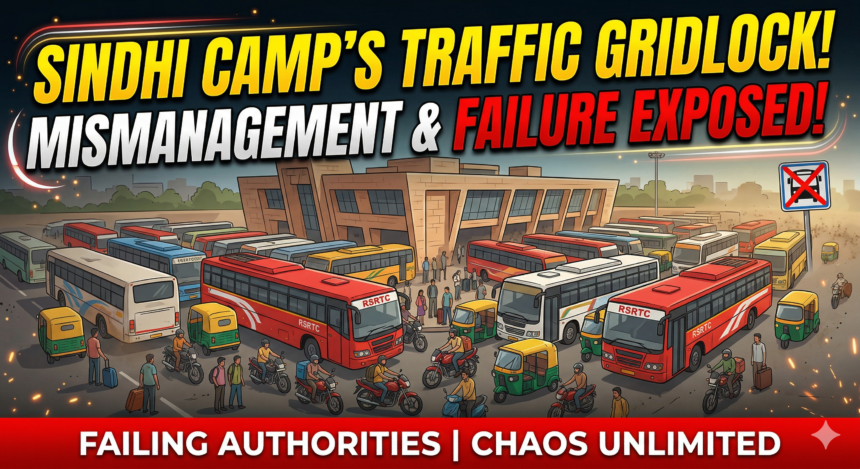
Jaipur: The persistent traffic congestion at Sindhi Camp, Jaipur’s central bus terminal, has once again come under scrutiny, with serious questions being raised over administrative failure, poor planning, and delays in shifting bus operations despite years of proposals.
Chronic Traffic Chaos at City’s Main Bus Terminal
Sindhi Camp, the busiest bus stand in Rajasthan’s capital, continues to face severe traffic congestion due to the heavy influx of buses and unregulated movement. The situation has worsened over the years, with commuters experiencing round-the-clock traffic jams on key routes surrounding the terminal.
Officials have acknowledged that the excessive load of buses and lack of proper traffic management have turned the area into a major bottleneck, affecting both public transport and general vehicular movement.
Overburdened Infrastructure and Planning Gaps
Urban planning documents have long identified Sindhi Camp as a major source of congestion in Jaipur. According to development plans, the terminal has “outlived its utility” and contributes significantly to traffic problems in the city.
Despite these findings, authorities have failed to implement effective solutions, such as relocating or decentralizing bus operations to alternative terminals.
More Read

Delay in Shifting Bus Operations
For over a decade, proposals have been made to shift private and intercity buses to new terminals to ease congestion. However, slow implementation and lack of coordination between departments have stalled progress.
Recent efforts, including the development of terminals like Heerapura, have only partially addressed the issue. While some buses have been diverted, Sindhi Camp continues to handle a large volume of traffic, limiting the impact of these measures.
Allegations of Authority Failure and Land Mismanagement
The report also highlights alleged lapses by authorities, including the Jaipur Development Authority (JDA), in land allocation and infrastructure planning. Questions have been raised about why suitable land identified for alternative bus terminals has not been effectively utilized.
More Read

Critics argue that poor coordination between agencies, delays in decision-making, and possible mismanagement of land resources have contributed to the prolonged crisis.
Encroachments and Poor Enforcement Add to Problem
Encroachments around Sindhi Camp have further aggravated traffic issues. Past civic drives have removed illegal structures and roadside vendors, but enforcement has remained inconsistent, allowing congestion to persist.
Additionally, unregulated stopping of buses, lack of designated parking, and inadequate traffic control measures continue to disrupt smooth movement in the area.
Impact on Commuters and City Traffic
The ongoing congestion has significant consequences:
- Increased travel time for daily commuters
- Frequent delays in bus schedules
- Higher fuel consumption and pollution levels
- Safety concerns for pedestrians and passengers
The situation also affects Jaipur’s image as a major tourist destination, as Sindhi Camp serves as a key entry point for visitors.
Need for Urgent Structural Reforms
Urban experts suggest that a long-term solution lies in decentralizing bus operations, strengthening traffic management, and ensuring strict enforcement against violations. Integrating multiple bus terminals with efficient connectivity could help reduce the burden on Sindhi Camp.
More Read

Conclusion
The Sindhi Camp traffic crisis reflects deeper systemic issues in urban planning and governance. Despite years of proposals and partial measures, the lack of decisive action has allowed the problem to persist. Without urgent reforms and coordinated efforts, Jaipur’s key transport hub is likely to remain a symbol of administrative failure and urban congestion.