

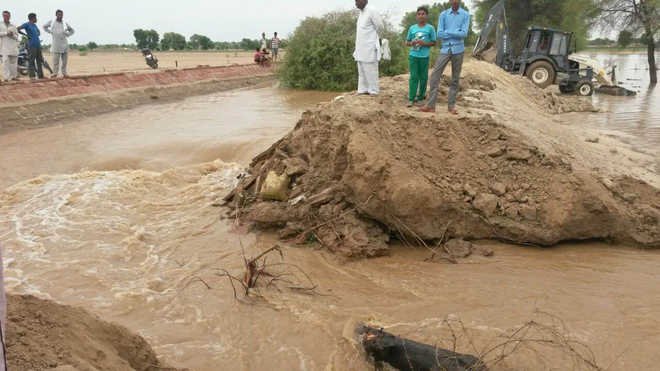
Jaipur/Sri Ganganagar: A major breach in the Indira Gandhi Canal Project (IGNP), considered the lifeline of Rajasthan’s desert districts, has triggered a severe drinking water and irrigation crisis across large parts of the state, while raising serious questions over the quality of repair work, contractor practices, and official monitoring during the recent canal closure period.
The canal breach occurred barely a day after water supply was restored following a 49-day shutdown for maintenance and reconstruction work. Officials and observers are now examining whether incomplete debris removal and poor site supervision during repair operations contributed to the collapse.
Canal Lining Collapses After Water Release
According to reports, water was released from the Harike Headworks in Punjab on the night of May 14 at a discharge level of approximately 7,200 cusecs following the completion of canal maintenance work.
However, on May 15, a nearly 100-foot stretch of canal lining reportedly collapsed near Fide Kalan village in Faridkot district, Punjab, causing major disruption in water flow toward Rajasthan.
The incident has affected water supply management for several districts dependent on the Indira Gandhi Canal system.
More Read

Allegations of Incomplete Debris Removal
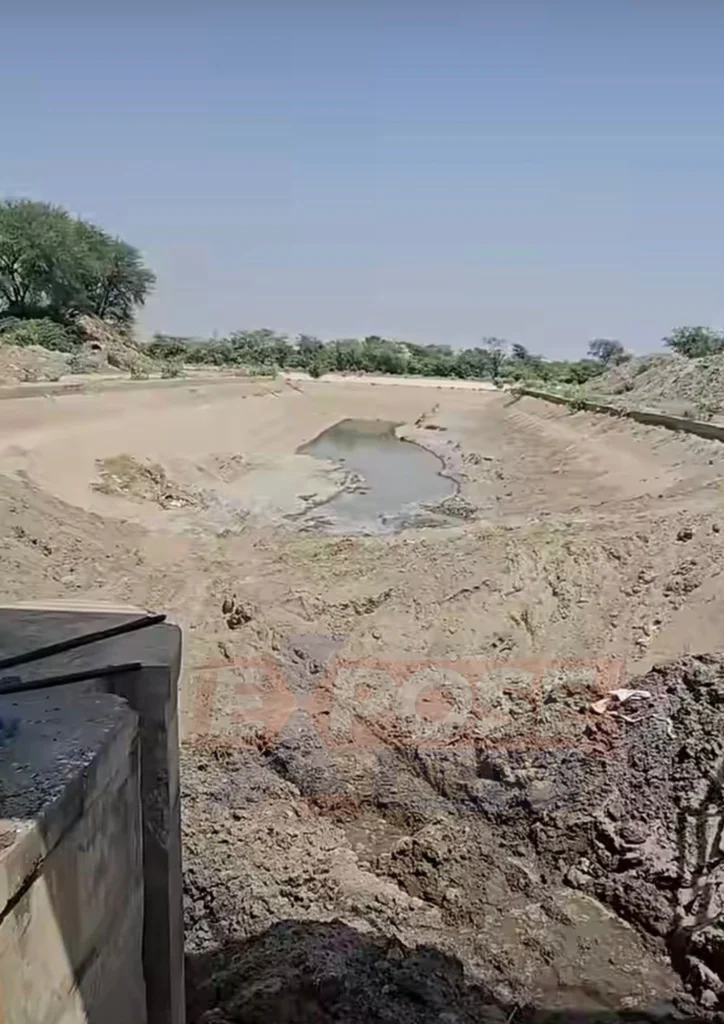
Ground-level observations and departmental discussions suggest that temporary earthen embankments and plugs constructed during reconstruction work may not have been fully removed before water release.
Contractors had reportedly built large soil barriers inside the canal bed to facilitate repair activities during the shutdown period. Standard procedure required complete removal of these obstructions before restarting water flow.
However, allegations have emerged that portions of the soil and debris were left inside the canal to reduce excavation and transportation costs.
More Read

As water pressure increased after the release, the remaining obstructions allegedly restricted the natural flow, leading to pressure build-up and eventual failure of the newly repaired canal lining.
Water Crisis Intensifies Across Rajasthan
The breach has worsened water shortages in several districts already facing summer stress and supply constraints.
Districts likely to be impacted include:
- Sri Ganganagar
- Hanumangarh
- Bikaner
- Jaisalmer
- Barmer
- Jodhpur
- Nagaur
- Churu
- Sikar
- Jhunjhunu
Officials have indicated that priority will now be given to drinking water supply, meaning irrigation water for farmers could face further delays.
The disruption comes at a critical agricultural period when farmers in canal-dependent regions are already struggling with limited water availability.
Timeline of the Incident
The sequence of events surrounding the breach has intensified criticism over project execution and monitoring:
More Read
- 49-day canal closure announced for repair and reconstruction works.
- Large-scale desilting and maintenance activities carried out.
- Earthen plugs and temporary barriers reportedly left inside sections of the canal.
- Water released from Harike Headworks on May 14.
- Water pressure increased due to obstruction in the canal bed.
- Canal lining collapsed on May 15, leading to major disruption.
Demand for Scientific Canal Cleaning
Experts and local observers argue that the incident highlights the urgent need for scientific and transparent cleaning of the entire canal system from head to tail.
Concerns are also being raised over the condition of distributaries, minors, and irrigation channels in rural areas, where desilting and cleaning work is often alleged to exist only on paper while ground conditions remain poor.
The breach has renewed debate over whether monitoring mechanisms are adequate enough to verify the quality of repair and maintenance works funded through public expenditure.
Questions Over Accountability
The incident has triggered demands for fixing responsibility on contractors and officials involved in the repair operations.
Several critical questions are now being raised:
- Were all temporary soil embankments and construction plugs removed before water release?
- Did field engineers physically verify the canal condition before issuing clearance?
- Will contractors responsible for poor execution face blacklisting or penalties?
- Will accountability be fixed against engineers and officials responsible for monitoring the work?
Observers also argue that repeated infrastructure failures point toward deeper structural issues involving supervision, contractor management, and quality control within irrigation and water resource projects.
Lifeline Canal Under Pressure
The Indira Gandhi Canal remains one of Rajasthan’s most important water infrastructure systems, supplying drinking water and irrigation support across vast desert regions.
Any prolonged disruption in the canal network has immediate consequences for both urban drinking water supply and rural agriculture.
As repair work continues on the damaged stretch, affected regions remain dependent on emergency water management measures while authorities work to restore normal flow.
The incident has once again highlighted the vulnerability of Rajasthan’s water infrastructure and the critical importance of accountability, technical oversight, and proper execution in large-scale public works.