

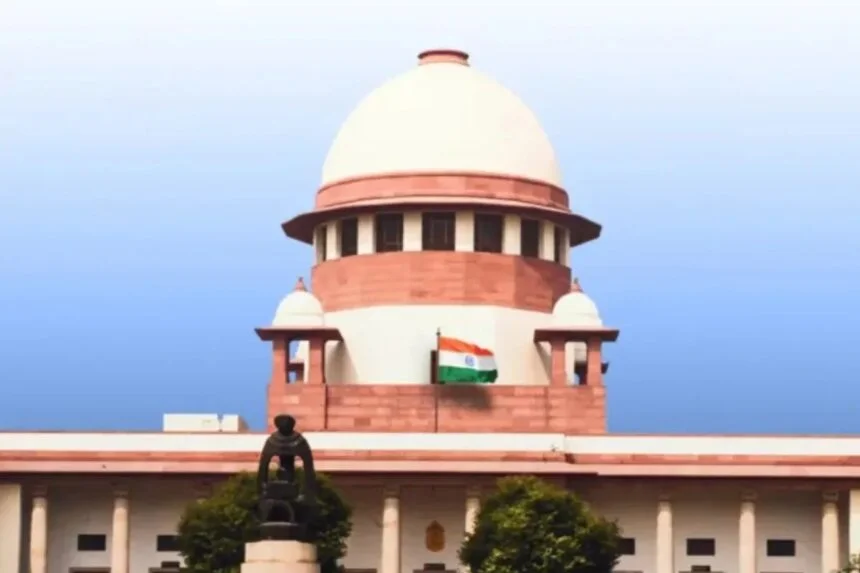
New Delhi: In a major relief to the Election Commission of India (ECI), the Supreme Court has upheld the constitutional validity of the Special Intensive Revision (SIR) process and dismissed all Public Interest Litigations (PILs) challenging the notification issued for the exercise ahead of Bihar and other state elections.
A bench comprising Justice Surya Kant and Justice Joymalya Bagchi ruled that the Election Commission is fully empowered under the Constitution and the Representation of the People Act, 1950, to conduct verification, revision and scrutiny of electoral rolls in order to ensure free, fair and transparent elections.
The court observed that maintaining an accurate and updated voter list is fundamental to strengthening democracy and preserving the integrity of the electoral process. It stated that the SIR exercise is a legitimate administrative mechanism aimed at identifying duplicate, shifted, deceased or otherwise ineligible entries in electoral rolls.
The bench clarified that adopting a special procedure under exceptional circumstances does not violate constitutional principles, provided the process remains within the framework of the law. The court noted that the Election Commission has the authority to undertake such revisions whenever required in public interest.
Court Clarifies Position on Citizenship
During the proceedings, the Supreme Court made a significant observation regarding citizenship and voter registration. The court emphasized that removal of a person’s name from the voter list does not automatically imply loss of Indian citizenship.
More Read
According to the bench, the absence of a person’s name in the electoral roll only reflects the Election Commission’s inability at that stage to verify eligibility or citizenship status. It cannot be treated as conclusive proof that the individual is a foreign national or incapable of establishing citizenship.
The court also directed the Election Commission to refer cases related to individuals whose names were removed during the 2003 Special Intensive Revision exercise to appropriate tribunals for verification of citizenship status.
Constitutional Powers of the Election Commission
Referring to Article 324 of the Constitution and provisions of the Representation of the People Act, the Supreme Court reaffirmed the wide powers vested in the Election Commission for preparation and revision of electoral rolls.
More Read

The court observed:
- The Election Commission has complete authority to verify and revise voter lists.
- Free and fair elections require a clean, transparent and updated electoral database.
- The SIR process represents an important step towards electoral reforms and strengthening democratic institutions.
Court’s Stand on Aadhaar and Verification Documents
The Supreme Court also examined objections raised regarding the list of 11 documents prescribed by the Election Commission for voter verification.
Advocate Ashwini Upadhyay, who welcomed the verdict, stated that the court found the document list to be reasonable and legally valid. According to him, the bench held that the prescribed documents do not violate any statutory provisions or constitutional safeguards.
On the issue of Aadhaar, the court reportedly did not make any adverse remarks. It neither declared Aadhaar mandatory nor rejected its use altogether, leaving the matter to the discretion of the Election Commission while framing future verification procedures.
PILs Challenging Process Rejected
More than 20 PILs had questioned the fairness, transparency and neutrality of the Election Commission during the SIR exercise. Petitioners alleged that the process could lead to arbitrary deletion of genuine voters and misuse ahead of elections.
However, the Supreme Court rejected all such arguments and concluded that the Election Commission had acted independently and impartially while conducting the revision process.
More Read

The court stressed that inclusion of ineligible persons in electoral rolls could undermine democratic principles, and therefore periodic verification is necessary to preserve the sanctity of elections.
The ruling is being seen as a landmark judgment that strengthens the constitutional authority of the Election Commission and reinforces the importance of transparent voter list management in India’s electoral democracy.