

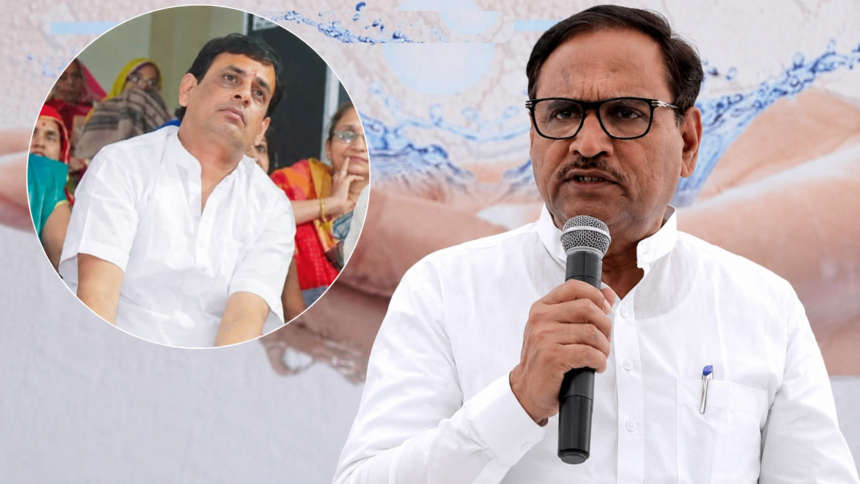
Jaipur: The Anti-Corruption Bureau (ACB) has intensified its investigation into the widely discussed ₹960 crore Jal Jeevan Mission (JJM) scam that allegedly took place during the previous Congress government in Rajasthan. After the arrest of retired IAS officer Subodh Agarwal from Delhi, former Rajasthan minister Mahesh Joshi has now been taken into custody by the ACB and placed under five-day police remand for detailed interrogation.
The investigation has now taken an international turn after officials revealed that the alleged mastermind and key middleman in the scam, Sanjay Badaya, fled to Thailand fearing arrest. According to sources linked to the probe, Badaya escaped abroad under the pretext of attending a wedding shortly before the ACB crackdown intensified.
Investigators believe Sanjay Badaya played a central role in coordinating the alleged corruption network involving bureaucrats, contractors, and influential political figures. Sources claim that Badaya maintained close ties with both former minister Mahesh Joshi and retired IAS officer Subodh Agarwal, who are considered key figures in the ongoing investigation.
Sanjay Badaya’s Alleged Role in the Scam
According to officials and sources connected to the investigation, Sanjay Badaya was allegedly involved in several critical activities linked to the scam, including:
- Managing financial transactions related to the alleged corruption network.
- Acting as a middleman in transfer and posting deals involving officials.
- Facilitating appointments of preferred individuals within the Public Health Engineering Department (PHED).
- Influencing and manipulating the tender process to secure contracts for selected firms.
The ACB is now preparing to arrest Badaya immediately upon his return to India. Agencies are also examining whether money linked to the alleged scam was diverted or routed through foreign channels.
More Read

How the ₹960 Crore Scam Was Allegedly Executed
The case was originally registered in 2023 after investigators uncovered alleged irregularities in the tender process under the Jal Jeevan Mission, a flagship rural drinking water scheme.
According to the investigation, during Mahesh Joshi’s tenure as minister, major violations of tender norms allegedly took place. Two firms — M/s Ganpati Tubewell and M/s Shri Shyam Tubewell — were allegedly awarded contracts worth crores in violation of established rules and procedures.
Investigators claim both companies secured the tenders using fake certificates purportedly linked to Ircon International. The forged eligibility documents allegedly enabled the firms to obtain contracts illegally under the PHED department.
More Read

The ACB has so far arrested 11 accused individuals in connection with the case, including company owners, contractors, and officials linked to the alleged conspiracy.
Three Major Questions Before the ACB
According to ACB Director General Govind Gupta, intensive interrogation of Mahesh Joshi is underway. Investigators are primarily focusing on three critical aspects of the alleged scam:
1. Money Trail
The ACB is attempting to determine where the scam money was transferred, hidden, or invested, and whether any assets were created using illegal proceeds.
2. Abuse of Official Position
Investigators are examining how tender rules were allegedly bypassed and whether ministerial influence was used to manipulate the contract allotment process.
3. Financial Dealings with Accused Persons
The agency is probing the financial relationship between Mahesh Joshi, Sanjay Badaya, and other absconding accused persons, including possible commission structures and transaction channels.
Political and Administrative Impact
The case has triggered major political debate in Rajasthan, with opposition leaders demanding strict action against all individuals involved irrespective of political position or bureaucratic influence.
More Read

The Jal Jeevan Mission was launched to provide tap water connections to rural households across India. However, the Rajasthan scandal has raised serious concerns regarding transparency, contractor selection, and monitoring of large-scale public infrastructure projects.
With senior politicians, bureaucrats, contractors, and middlemen now under the scanner, the ACB is expected to widen the investigation further in the coming weeks.