

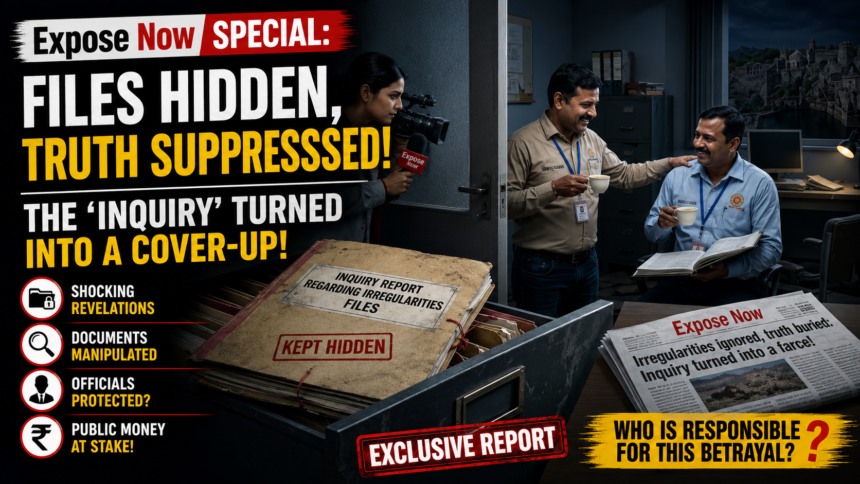
Chittorgarh: A fresh controversy has emerged in Rajasthan’s mining sector after allegations that valuable quartzite was allegedly extracted and marketed as masonry stone, potentially resulting in significant losses to the state exchequer. The allegations have also raised questions about the role of mining officials and engineers responsible for inspection, classification, and regulatory enforcement.
The issue has intensified concerns over transparency in mineral classification and the implementation of mining regulations in one of Rajasthan’s major mineral-producing districts.
Alleged Misclassification at the Centre of the Controversy
According to the allegations, mineral extracted from certain leases was reportedly treated and dispatched as ordinary masonry stone despite claims that the material qualified as quartzite, a higher-value mineral with different royalty implications.
Mining experts note that proper mineral classification is critical because royalty rates, commercial value, environmental approvals, and mining permissions vary depending on the mineral category. Government and environmental records also show that mining leases in Chittorgarh can include quartzite and masonry stone under approved mining plans, making accurate classification essential.
Engineers’ Role Under Scrutiny
The allegations have placed the spotlight on officials responsible for field inspections and certification.
More Read

Questions being raised include:
- Whether inspections were conducted according to mining regulations.
- Whether extracted material was correctly identified before dispatch.
- Whether royalty calculations reflected the actual mineral being mined.
- Whether any officials ignored irregularities during inspections.
If proven, such practices could have implications for government revenue collection and regulatory compliance.
Potential Financial Impact
Mining specialists point out that incorrect classification of minerals may lead to:
More Read

- Reduced royalty collection.
- Loss of government revenue.
- Distortion of mineral production records.
- Unfair commercial advantage.
- Regulatory and environmental compliance concerns.
Any confirmed discrepancy would require verification of production records, dispatch permits, royalty payments, and laboratory assessments.
Need for Technical Verification
Experts say resolving the controversy would require a scientific examination of:
- Geological reports.
- Approved mining plans.
- Mineral dispatch records.
- Royalty assessment documents.
- Laboratory testing of extracted material.
- Inspection reports prepared by mining authorities.
Such verification would determine whether the mineral was correctly classified under applicable mining laws.
Mining Sector Faces Increasing Oversight
Rajasthan remains India’s leading producer of several major and minor minerals, making strict regulatory oversight essential for safeguarding public revenue and ensuring sustainable mining practices.
The Chittorgarh region has long been associated with extensive mining activity involving limestone, quartzite, silica sand, and masonry stone. Environmental clearance records indicate that several mining leases in the district include multiple mineral categories, requiring careful monitoring by the authorities.
Calls for Independent Investigation
The allegations have prompted demands for an independent inquiry into the matter. Stakeholders have called for:
More Read
- Re-verification of mineral classification.
- Audit of royalty collections.
- Examination of dispatch and production records.
- Accountability of officials if procedural violations are established.
- Strengthening of inspection mechanisms to prevent similar disputes.
Official Findings Awaited
As of now, the allegations remain subject to official verification, and no competent authority has publicly established wrongdoing in the matter. Any determination of liability would depend on the findings of a formal investigation, examination of geological evidence, and applicable legal proceedings.
The controversy has nevertheless renewed focus on transparency, mineral classification, and accountability in Rajasthan’s mining administration.