

State Gives Preference to Local Suppliers in Public Tenders
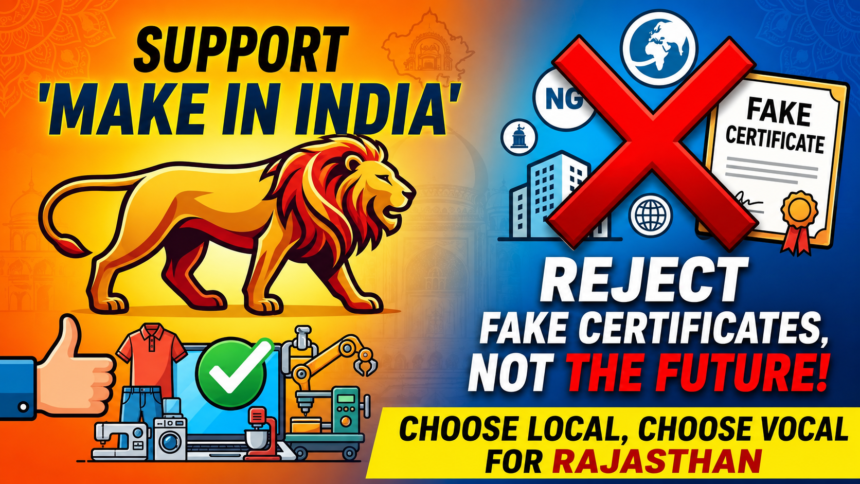
Jaipur: In a major push to strengthen domestic manufacturing and support indigenous businesses, the Rajasthan government has introduced a new procurement policy that prioritises ‘Make in India’ products and local suppliers in all government purchases and tenders.
The move aligns with the Central Government’s flagship initiatives, ‘Make in India’ and ‘Aatmanirbhar Bharat’, aimed at reducing dependence on imports and promoting self-reliance in manufacturing.
Finance Department Issues New Procurement Guidelines
The Rajasthan Finance Department has directed all government departments and procuring entities to frame tender conditions in a way that encourages participation from domestic manufacturers and local suppliers.
Officials have been instructed to ensure that procurement processes do not create unnecessary barriers for Indian companies.
Preference for Suppliers with High Local Content
Under the new policy, suppliers will be classified based on the percentage of local content in their products and services.
More Read

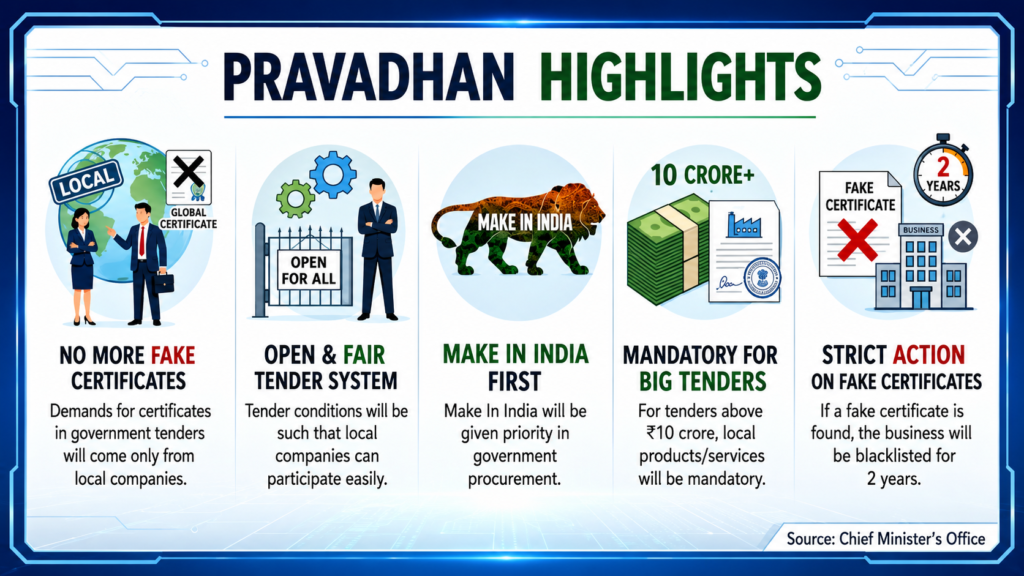
A supplier will be considered eligible for preference if at least 50 per cent of the product or service value is generated within India. Government departments must explicitly mention the preference for ‘Make in India’ products in tender documents.
Restrictive Tender Conditions Prohibited
The government has clarified that demanding foreign certifications, specifying particular international brands, or setting technical requirements that unfairly exclude domestic manufacturers will be considered discriminatory.
If Indian standards are available, departments will not be permitted to insist on foreign certifications without prior approval from competent authorities.
More Read

Local Content Certificate Mandatory for Large Tenders
For government procurements exceeding ₹10 crore, participating firms will be required to submit a certificate verifying the percentage of local content in their products.
The certificate must be issued by a statutory auditor, cost auditor, or an independent chartered accountant. Vendors must also provide self-declarations confirming that their products comply with ‘Make in India’ requirements.
False Claims May Lead to Blacklisting
The government has introduced strict penalties for misrepresentation.
Companies found submitting false declarations or inaccurate local content certificates may face blacklisting for up to two years, along with other departmental action. Officials who fail to comply with the new guidelines may also face disciplinary proceedings.
Refurbished Imported Products Excluded
The policy clearly states that imported products that are merely repaired, refurbished, or resold in India will not qualify as locally manufactured goods.
According to the guidelines, refurbishment does not amount to manufacturing because it does not create a new product. Therefore, such items will not be counted as local content under the policy.
More Read

Boost for MSMEs and Domestic Manufacturing
Industry experts believe the policy will create significant opportunities for micro, small and medium enterprises (MSMEs), startups, and local manufacturers across Rajasthan.
By increasing access to government contracts, the initiative is expected to encourage investment, generate employment, strengthen supply chains, and boost the state’s industrial ecosystem.
Aligning State Policy with National Goals
The Rajasthan government’s decision follows similar guidelines already implemented by the Central Government for its procurement processes.
With this step, Rajasthan aims to emerge as a leading “Vocal for Local” state, ensuring that public spending contributes directly to the growth of Indian industries while maintaining transparency and value for money in government procurement.