

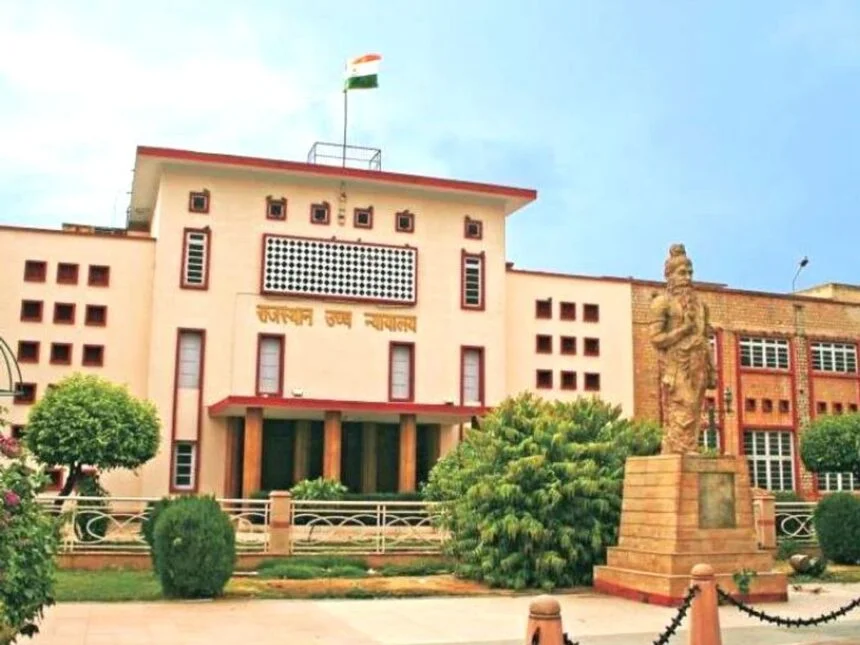
Jaipur, May 22: The ongoing delay in conducting Panchayat and Urban Local Body (ULB) elections in Rajasthan has turned into a major constitutional and political challenge for the government led by Bhajan Lal Sharma after repeated interventions by the Rajasthan High Court.
The matter has now become one of the most closely watched political and legal battles in the state, with the High Court expressing serious concern over delays in holding elections to Panchayats and municipal bodies despite constitutional timelines having expired months ago.
High Court Earlier Directed Elections by April 15, 2026
The controversy stems from a major order passed by a Division Bench of the Rajasthan High Court on November 14, 2025, directing the Rajasthan government and the Rajasthan State Election Commission to complete Panchayat and Urban Local Body elections by April 15, 2026.
The court had observed that delaying local body elections beyond the constitutional timeframe violated democratic principles and provisions under Articles 243E and 243K of the Constitution.
Petitioners in the case argued that the terms of thousands of Panchayats and dozens of municipal bodies had already expired, but elected representatives were not being restored through timely elections.
More Read

Government Seeks More Time, Cites OBC Reservation and Delimitation Issues
Despite the court’s deadline, the state government later approached the High Court and subsequently the Supreme Court seeking additional time to conduct the elections.
The government argued that:
- Fresh ward delimitation exercises were required
- Reports of the OBC Commission were pending
- Simultaneous elections under the “One State, One Election” model required additional preparation
- Administrative and logistical constraints made immediate elections difficult
The Rajasthan government also informed the court that delimitation exercises in several Urban Local Bodies had already been quashed earlier, making fresh preparation necessary before elections could be conducted.
More Read

Contempt Notices Issued Over Delay
As election schedules continued to remain pending even after the court-imposed deadline, the Rajasthan High Court reportedly took a stricter stance and issued contempt notices to the State Election Commission and State Election Commissioner Rajeshwar Singh.
The court questioned why voter list revision schedules were being extended beyond the deadline already fixed by the judiciary.
The contempt proceedings significantly increased pressure on both the government and the Election Commission.
Political Battle Intensifies
The delay in elections has triggered sharp political reactions across Rajasthan.
Opposition leaders have accused the BJP government of weakening grassroots democracy by postponing local elections and continuing administration through appointed officials instead of elected representatives.
The Congress has alleged that delaying elections undermines constitutional governance and affects development works at the Panchayat and municipal levels.
More Read

Meanwhile, the Bhajan Lal government has defended its position by arguing that conducting simultaneous elections after proper delimitation and reservation restructuring would ensure administrative efficiency and better governance.
Legal Questions at the Centre of Dispute
The dispute has now raised several major constitutional and administrative questions:
- Can local body elections be delayed due to delimitation and reservation exercises?
- Does the Constitution permit indefinite extensions beyond the tenure of elected Panchayats and municipal bodies?
- Can “One State, One Election” become a valid ground for postponement?
- Should administrators continue to govern local bodies in the absence of elected representatives?
Legal experts note that constitutional provisions governing Panchayat and municipal elections generally require polls to be conducted within six months of the expiry of the term of elected bodies.
Next Hearing Crucial
The matter remains under active judicial scrutiny, and the next hearing before the Rajasthan High Court is expected to play a crucial role in determining the future timeline for elections across the state.
With constitutional questions, political stakes, and administrative accountability all intertwined, the Panchayat and Urban Local Body election issue has emerged as one of the biggest governance challenges facing the Bhajan Lal Sharma government.
The outcome of the ongoing legal battle is expected to have long-term implications for local governance, electoral reforms, and democratic decentralization in Rajasthan.