

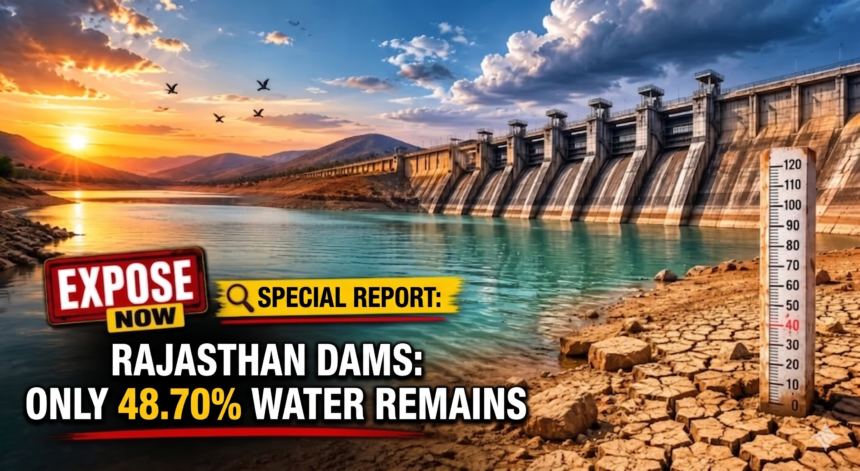
Jaipur: With the arrival of peak summer conditions in Rajasthan, alarming signs of a deepening water crisis have started emerging across the state. Fresh data released by the Water Resources Department (WRD) reveals that water levels in Rajasthan’s dams are declining rapidly, raising concerns over drinking water availability and irrigation supply in the coming months.
According to official figures, the state’s 693 dams — including major, medium, and minor reservoirs — currently hold only 48.70 percent of their total storage capacity. The report highlights a sharp depletion of water reserves, with the state losing nearly 208.04 million cubic metres (M.cum) of stored water in just the last 15 days.
Experts warn that if the depletion continues at the current pace, several districts could face severe water shortages before the arrival of the monsoon.
Sharp Decline Since Post-Monsoon Period
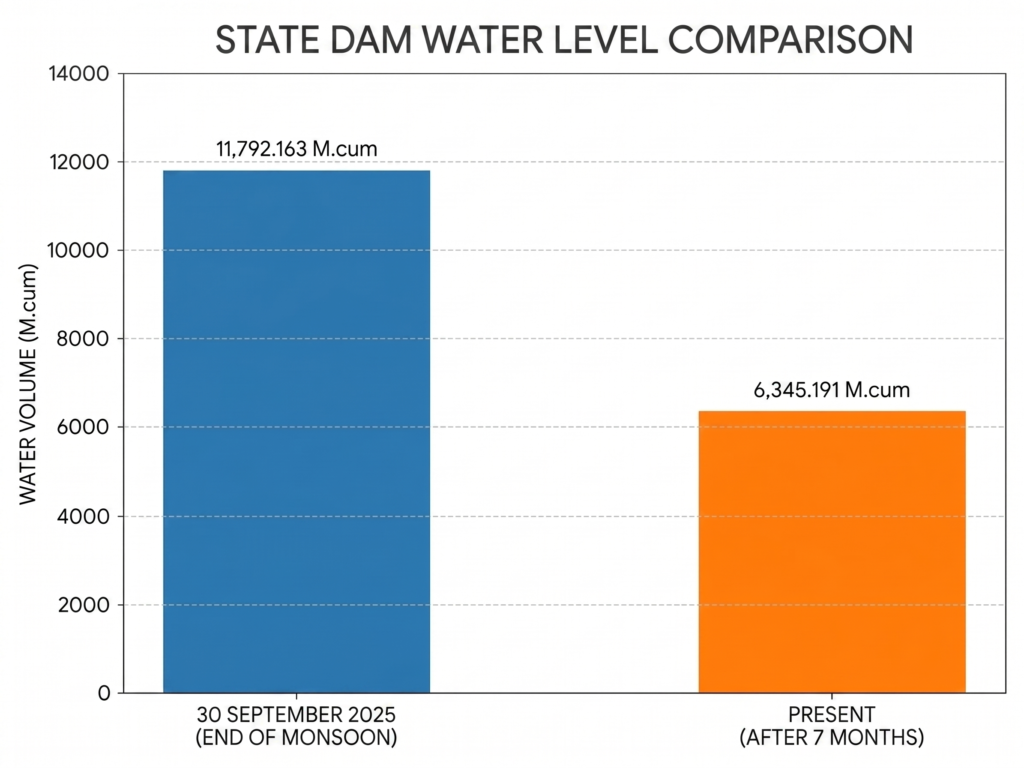
Comparative data from the WRD shows that at the end of the 2025 monsoon season, on September 30, reservoirs across Rajasthan were filled up to 90.51 percent of their total capacity, storing approximately 11,792.163 M.cum of water.
However, due to continuous extraction for drinking and irrigation purposes, coupled with intense evaporation during prolonged heat conditions, the total available storage has now reduced to just 6,345.191 M.cum.
More Read

The latest figures underline the growing pressure on Rajasthan’s water infrastructure as summer temperatures continue to rise across the desert state.
Major Dams Still Stable but Under Pressure
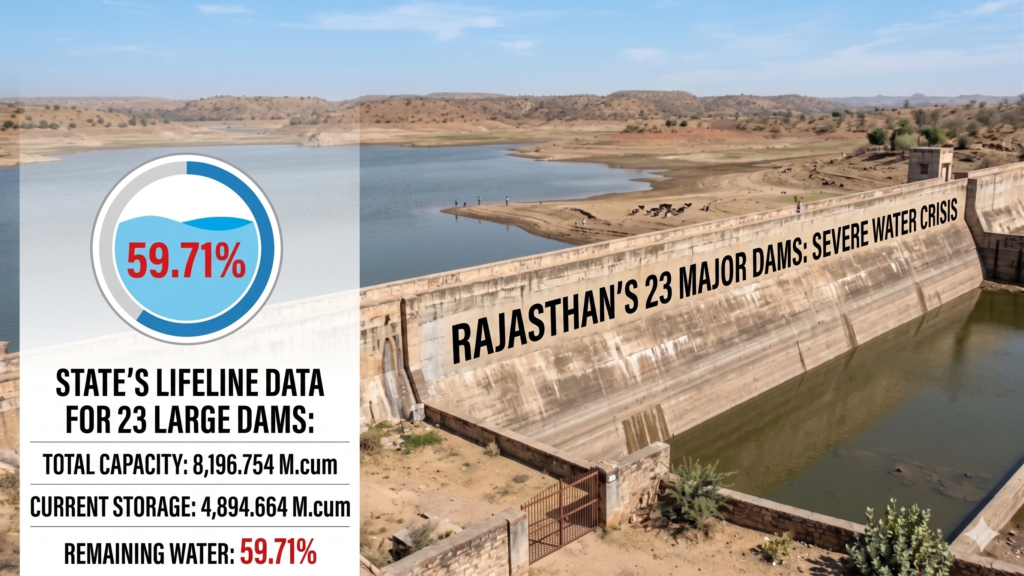
The condition of Rajasthan’s 23 major dams, considered the backbone of the state’s water supply system, remains comparatively better than smaller reservoirs. However, officials say the declining trend is still concerning.
- Total storage capacity: 8,196.754 M.cum
- Current storage: 4,894.664 M.cum
- Available water percentage: 59.71%
Key Reservoir Status
- Bisalpur Dam, the primary drinking water source for Jaipur and surrounding regions, is currently filled up to 76.83 percent, holding 841.985 M.cum of water.
- Rana Pratap Sagar in Kota stands at 67.75 percent capacity.
- Kota Barrage remains relatively stable at 98.74 percent.
- Mahi Bajaj Sagar in Banswara has dropped to 46.29 percent, with current storage at 1009.388 M.cum.
- Meanwhile, Jaipur district’s Ramgarh Dam and Kalakhsagar Reservoir are completely dry, recording 0 percent storage.
Medium and Small Reservoirs in Critical Condition
The most alarming situation has emerged in medium and small dams that cater largely to rural areas and smaller towns.
More Read

263 Medium Reservoirs and Large Minor Dams
These reservoirs, each having a capacity above 4.25 M.cum, are witnessing rapid depletion.
- Total capacity: 4,007.722 M.cum
- Current storage: 1,283.243 M.cum
- Remaining storage: 32.02%
407 Small Dams
Small dams, regarded as the lifeline for rural water supply and local irrigation systems, are in the worst condition.
- Total capacity: 824.614 M.cum
- Current storage: 167.283 M.cum
- Remaining storage: Only 20.29%
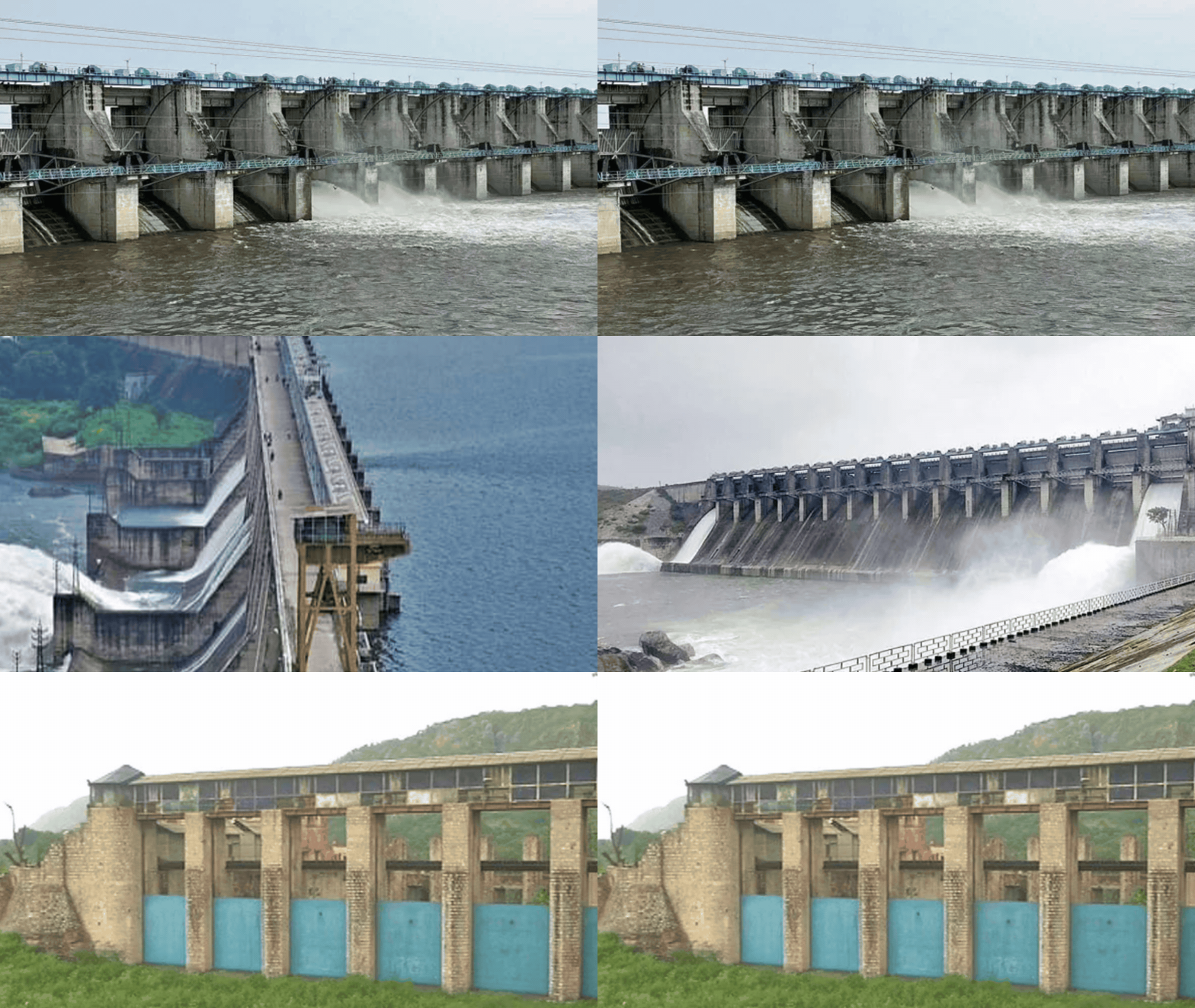
The sharp fall in water availability in these reservoirs is expected to directly impact villages dependent on local water bodies for daily consumption and agriculture.
257 Reservoirs Completely Dry
Government data further reveals that out of the state’s 693 dams, as many as 257 reservoirs have gone completely dry, with no usable water left.
Only 10 dams across Rajasthan are currently filled to 100 percent capacity, including:
- Anasagar Lake in Ajmer
- Kanota Dam in Jaipur
Another 426 reservoirs still contain some amount of water, but officials say they are depleting rapidly.
More Read

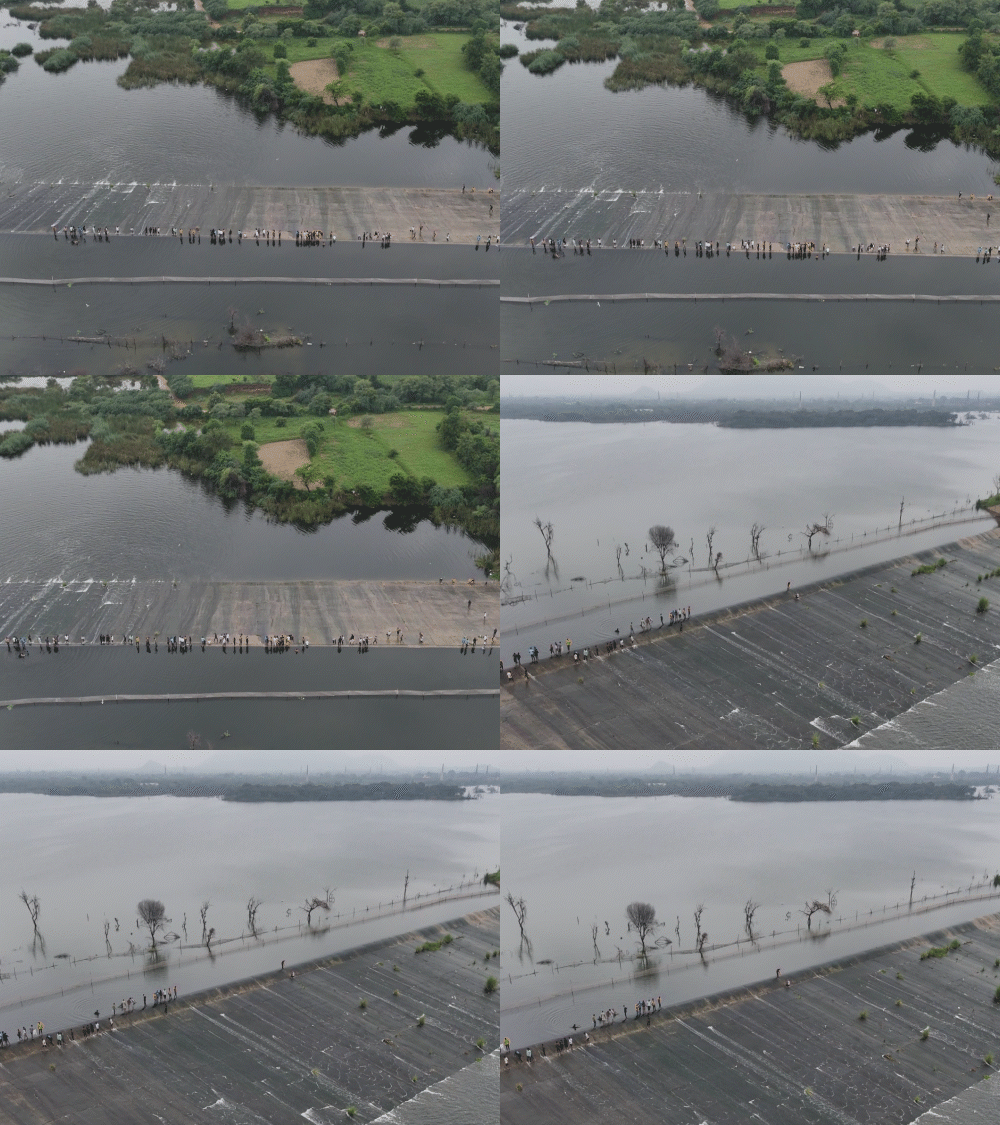
Regional Analysis Shows Worst Situation in Jodhpur and Bharatpur Zones
Zone-wise assessment paints an even more serious picture in western and eastern Rajasthan.
- Jodhpur Zone: 24.59% storage
- Bharatpur Zone: 26.09% storage
Most reservoirs in these regions are either already dry or nearing depletion.
In contrast, the Kota Division, supported by the Chambal river dam system, remains in the strongest position with 57.62 percent water storage, making it the best-performing region in the state.
Rising Concerns Ahead of Peak Summer
The continuous decline in reservoir levels has intensified concerns among water management authorities. Rural drinking water supply schemes, irrigation projects, and urban distribution systems may come under severe stress if rainfall remains delayed or below normal this year.
Officials are expected to review conservation measures, regulate water usage, and monitor supply systems more closely in the coming weeks to prevent a large-scale crisis.