Jaipur: Rajasthan is witnessing a growing administrative campaign promoting fuel conservation and reduction in government expenditure, following Prime Minister Narendra Modi’s repeated appeal for responsible fuel usage and sustainable public practices. After Chief Minister Bhajanlal Sharma recently decided to reduce the size of his official convoy, Rajasthan Governor Haribhau Bagde and Deputy Chief Minister Dr. Prem Chand Bairwa have now taken similar symbolic yet impactful steps aimed at promoting simplicity, environmental awareness, and public transport usage.
The developments are being seen as part of a broader effort to reduce “VIP culture” while encouraging efficient use of public resources across the state.
Governor Haribhau Bagde Orders Major Reduction in Official Convoy
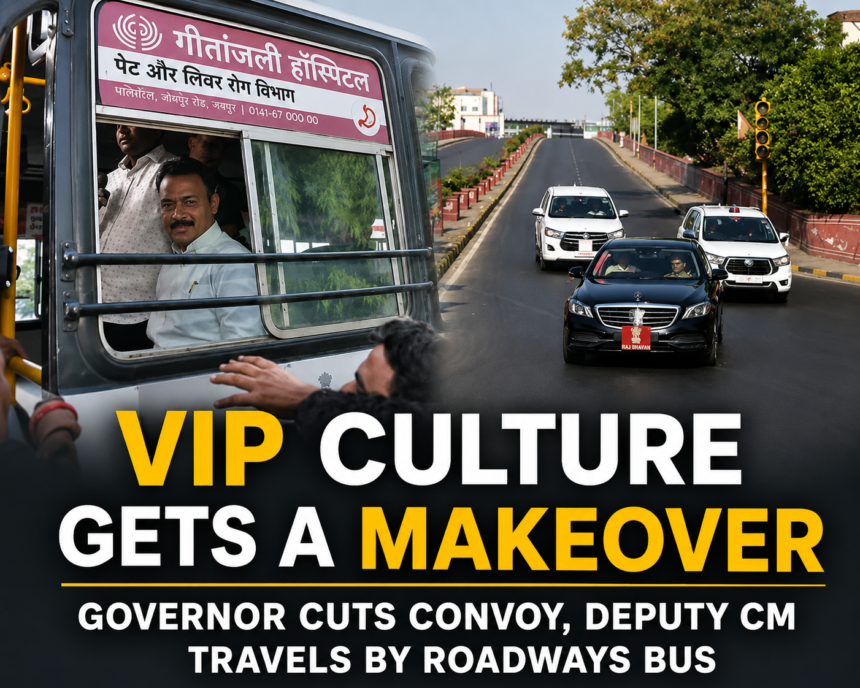
Rajasthan Governor Haribhau Bagde has issued strict directions to significantly reduce the number of vehicles accompanying his official convoy during travel.
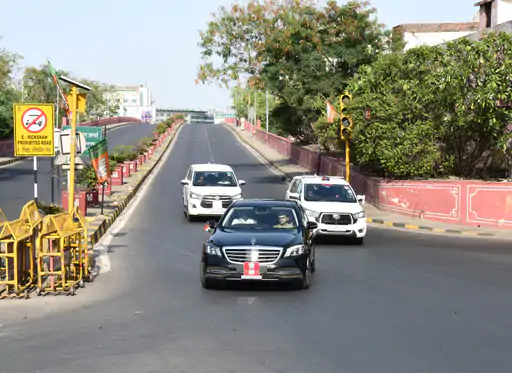
Officials confirmed that when the Governor departed for the airport on Thursday, the convoy arrangement looked notably different from the usual protocol.
Pilot vehicles accompanying the Governor have been removed,
Ambulance and fire brigade escort vehicles will no longer routinely travel with the convoy,
Only three official vehicles will now accompany the Governor during movements.
Sources at Raj Bhavan stated that the new rule will not be limited to Jaipur alone but will also apply during the Governor’s travel across Rajasthan and other parts of the country.
The Governor has reportedly instructed officials to minimize the use of government vehicles wherever possible and urged citizens to adopt public transport systems as part of a larger effort to conserve fuel and reduce unnecessary expenditure.
Deputy CM Travels in Rajasthan Roadways Bus
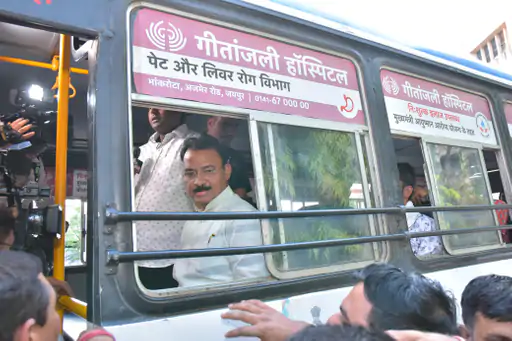
In another unusual and widely discussed move, Rajasthan Deputy Chief Minister and Transport Minister Dr. Prem Chand Bairwa was seen traveling in a Rajasthan Roadways bus along with ordinary passengers on Thursday.
Dr. Bairwa reportedly arrived at Jaipur’s “22 Godam” bus stand like a regular commuter and waited for the bus before beginning his journey toward Phagi in Dudu Assembly constituency, where he was scheduled to attend a “Gram Vikas Chaupal” program.
What attracted even more public attention was the Deputy Chief Minister’s decision to avoid official government vehicles entirely during the trip.
Sources said Dr. Bairwa directed accompanying officials and staff members to travel by roadways bus instead of using departmental vehicles.
During the journey, the Deputy CM interacted with passengers, listened to their concerns regarding transport services, and discussed public issues directly with commuters. Passengers reportedly appreciated the minister’s simple approach and willingness to travel among ordinary citizens.
“Fuel Conservation is Nation Building”: Deputy CM
Speaking about the initiative, Dr. Prem Chand Bairwa said he was inspired by the work culture and public conduct promoted by Prime Minister Narendra Modi and Chief Minister Bhajanlal Sharma.
He emphasized that fuel conservation has become increasingly important amid global economic and energy-related challenges.
“In the current global economic environment, conserving fuel is extremely important. Citizens should prioritize public transport over private vehicles in the national interest. Saving petrol and diesel is also a meaningful contribution toward nation-building.”
Rajasthan Government Signals New Administrative Approach
The recent actions by the Chief Minister, Governor, and Deputy Chief Minister indicate that the Rajasthan government is attempting to establish a new administrative culture focused on austerity, efficiency, and environmental responsibility.
Officials believe that reducing unnecessary convoy movements and promoting public transportation could help lower fuel consumption, reduce the burden on the state exchequer, and send a strong symbolic message about responsible governance.
Political observers also note that such measures may resonate positively with the public at a time when fuel prices and environmental concerns remain major national issues.
The campaign is expected to encourage wider adoption of public transport among government departments and possibly inspire similar initiatives in other states as well.