

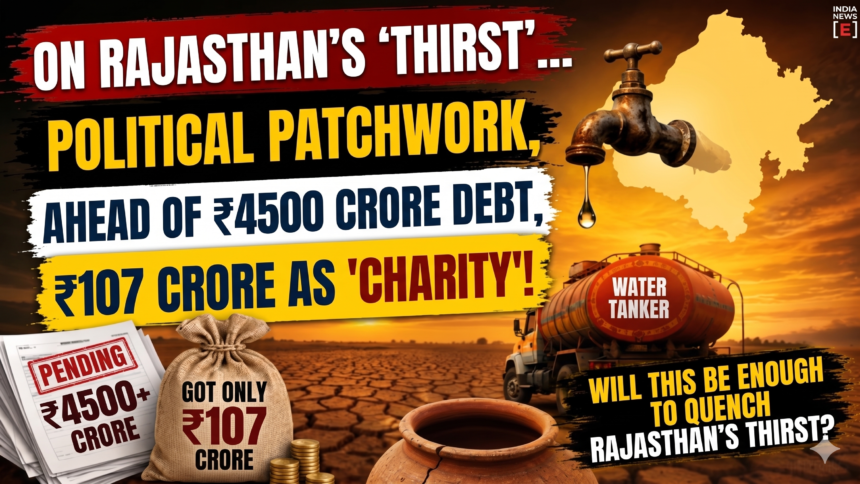
Jaipur: As Rajasthan battles extreme summer temperatures crossing 45 degrees Celsius, a fresh crisis is emerging over drinking water supply management in the state. The ongoing payment dispute between the government and contractors associated with the Public Health Engineering Department (PHED) has intensified political and administrative tensions, with contractors warning of a possible shutdown of work if pending dues are not cleared soon.
The Rajasthan government has recently released ₹107 crore under the AMRUT 2.0 scheme in an attempt to ease pressure on ongoing water infrastructure projects. However, contractors and industry representatives argue that the amount is insignificant compared to the massive outstanding liabilities reportedly exceeding ₹4,500 crore.
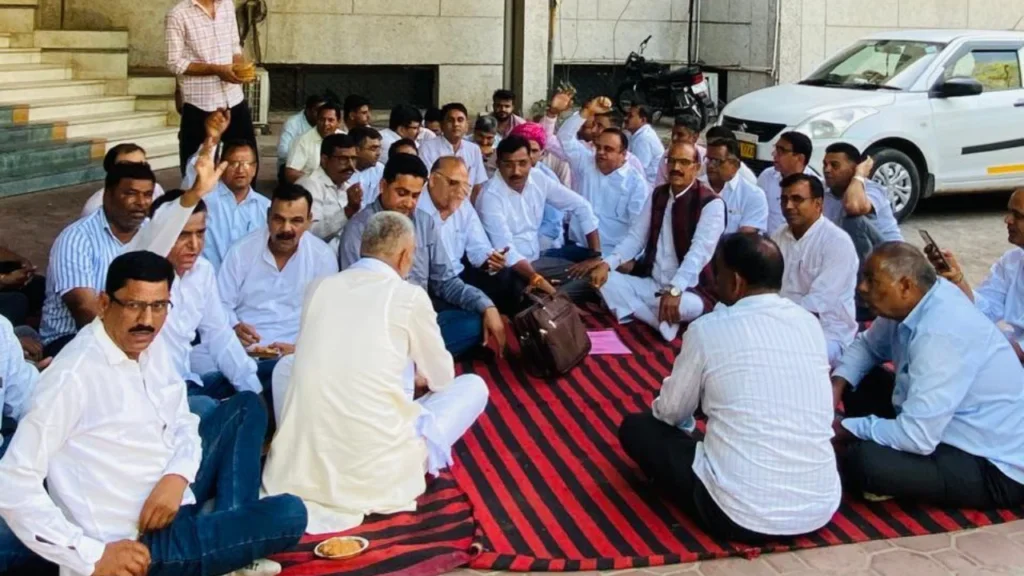
Contractors Warn of ‘Do or Die’ Protest
Contractors linked to Public Health Engineering Department Rajasthan (PHED) have issued strong warnings to the government, stating that continued delays in payment could force them to halt repair work, tanker operations, pipeline maintenance, and execution of new drinking water projects across the state.
Industry representatives claim that unless substantial payments are released immediately, critical urban and rural water supply systems could face severe disruption during peak summer months.
The threat of a strike has raised concerns about the possibility of water shortages in several districts already struggling with rising demand and falling groundwater levels.
More Read

₹107 Crore Release Raises Questions
The latest financial release under the AMRUT 2.0 urban infrastructure scheme has triggered criticism from contractor groups and opposition voices, who argue that the amount covers only a tiny fraction of the total pending liabilities.
According to estimates cited by contractor associations:
- Total pending dues: More than ₹4,500 crore
- Amount released under AMRUT 2.0: ₹107 crore
Stakeholders argue that the released amount constitutes less than three percent of the overall dues and is insufficient to stabilize ongoing operations.
More Read

Contractors have questioned how such a limited allocation can support large-scale infrastructure maintenance, water tanker deployment, and execution of pending projects during a period of severe heatwave conditions.
Jal Jeevan Mission Payments Still Pending
According to sources familiar with the matter, the recently released funds are reportedly limited to projects covered under the AMRUT 2.0 scheme, while a much larger financial crisis continues under the Jal Jeevan Mission (JJM).
Contractors claim that more than ₹3,500 crore in payments linked to Jal Jeevan Mission works are still pending, and no separate budget allocation has yet been released by the state government for clearing those dues.
Sources further stated that although the Central Government has approved a conditional allocation of approximately ₹4,503 crore for Rajasthan under the Jal Jeevan Mission, the actual amount available to the PHED may remain significantly lower until various compliance conditions are fulfilled.
Officials and contractors estimate that the state may practically receive only around ₹500 crore initially, leaving a major gap between available funds and pending liabilities.
Concerns Over Impact on Water Supply Projects
Experts warn that prolonged financial uncertainty could severely affect Rajasthan’s drinking water infrastructure projects, especially at a time when the state faces rising summer demand and recurring drought-like conditions in several regions.
More Read

Contractors associated with pipeline laying, water distribution systems, tanker services, and rural drinking water schemes have reportedly expressed frustration over delayed payments and rising operational costs.
Several insiders allege that the government is currently attempting short-term damage control rather than offering a long-term financial solution to the crisis.
Political Pressure Mounts
The issue has now evolved into a major political flashpoint, with critics accusing the government of attempting to manage public perception through limited financial announcements instead of addressing the broader structural payment crisis.
Opposition voices and contractor groups argue that unless immediate large-scale financial intervention takes place, the state could witness disruptions in ongoing water projects and severe public inconvenience during the peak summer season.
Meanwhile, the government has maintained that efforts are underway to streamline payments and ensure continuity of essential public services.
The coming weeks are likely to prove critical as contractor associations decide whether to intensify their agitation or continue negotiations with the administration.