

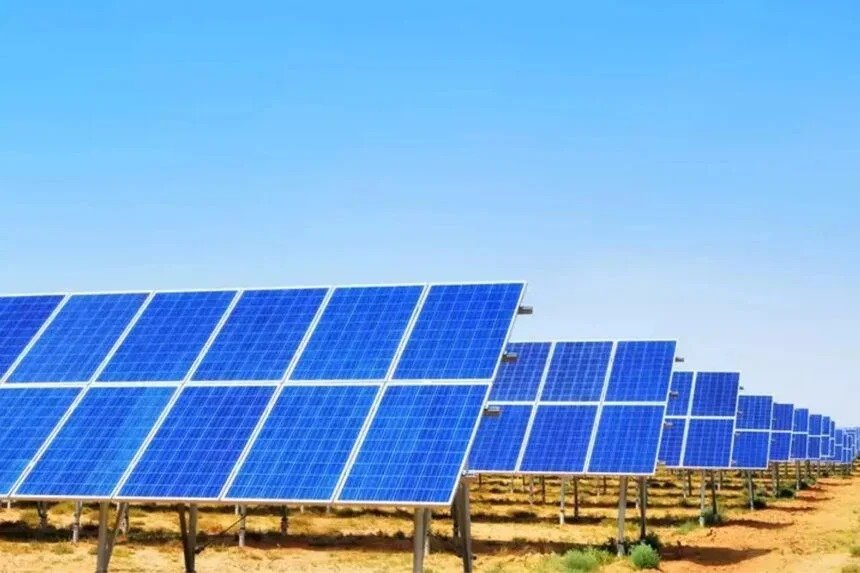
Jaipur: A major policy shift by the Central Government aimed at boosting domestic manufacturing under the “Make in India” initiative is likely to significantly increase the cost of solar energy systems for consumers across Rajasthan and other states.
Beginning June 1, 2026, the Ministry of New and Renewable Energy (MNRE) under the Government of India will make it mandatory for all new solar projects to use fully domestic content requirement (DCR) solar module cells. Under the new regulation, solar panels installed in approved projects must be manufactured using indigenous technology and locally produced solar cells.
While the move is intended to strengthen India’s renewable energy manufacturing ecosystem and reduce dependence on imports, solar developers and industry experts warn that the market is currently unprepared for such an immediate transition.
Solar System Costs May Rise by 25–35 Percent
Industry stakeholders claim that the sudden enforcement of the DCR-only rule could sharply increase the cost of rooftop solar systems for households, businesses, and industries.
According to sector estimates, India’s current annual production capacity for DCR solar modules stands at only 15–20 gigawatts, while the yearly demand has already crossed 50 gigawatts. This significant gap between demand and supply is expected to push prices substantially higher in the coming months.
More Read

At present, non-DCR modules — largely based on imported or foreign technology — are reportedly available at approximately ₹13–15 per watt. However, DCR-compliant domestic modules are currently priced at around ₹22 per watt or even higher.
The impact is expected to be most visible in small and medium rooftop solar installations. A standard 5-kilowatt rooftop solar system, which earlier cost nearly ₹2.40 lakh without subsidy, could now cost around ₹3.05 lakh after the implementation of the new rule. This means consumers may have to bear an additional burden of nearly ₹65,000.
Developers Seek Phased Implementation
Amid growing concerns, solar developers and renewable energy associations have urged the Centre to reconsider the immediate implementation timeline.
More Read

Rajasthan Solar Association and several developer groups have reportedly written to the Ministry of New and Renewable Energy requesting an extension of the June 1 deadline and a phased rollout of the domestic panel mandate.
According to Nitin Agrawal, promoting indigenous manufacturing is a welcome and necessary step for the long-term growth of India’s solar sector. However, he stated that the domestic market currently lacks adequate production capacity to meet nationwide demand.
He warned that implementing the rule abruptly could slow down ongoing rooftop solar projects in homes, commercial establishments, and industries, while also discouraging new consumers from adopting solar energy due to rising installation costs.
Concerns Over Renewable Energy Adoption
Experts believe the policy could temporarily affect the rapid growth of rooftop solar adoption, especially among middle-class households and small business owners who rely on affordable solar systems to reduce electricity bills.
Developers have argued that unless domestic manufacturing capacity expands significantly, supply shortages and price escalation may continue, creating uncertainty in the renewable energy market.
Industry bodies are now demanding a transition period that would allow manufacturers to scale up production gradually while ensuring that consumers are not burdened with steep price increases.
More Read

Push for ‘Make in India’ Versus Market Reality
The Centre’s move is part of a broader effort to strengthen India’s clean energy supply chain and reduce dependence on imported solar equipment, particularly from foreign manufacturers. However, experts say balancing self-reliance with affordability will remain a major challenge for policymakers.
With rooftop solar emerging as a key solution for reducing electricity expenses and promoting green energy, stakeholders fear that a sudden cost increase may weaken public interest in solar adoption if relief measures or phased implementation are not introduced.
The Ministry has not yet issued any response regarding the developers’ demand for an extension or relaxation in the implementation schedule.