

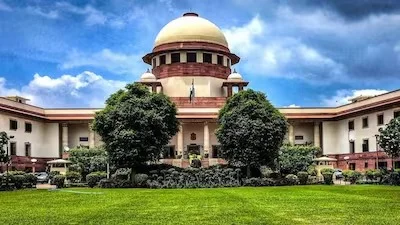
New Delhi/Jaipur: In a landmark development for the promotion of Rajasthan’s regional identity and linguistic heritage, the Supreme Court of India has directed the Rajasthan government to prepare a structured and time-bound roadmap for the phased implementation of the Rajasthani language in schools across the state.
A division bench comprising Justice Vikram Nath and Justice Sandeep Mehta instructed the state government to submit a detailed compliance report by September 30, 2026, outlining the steps taken to introduce Rajasthani language education in government and private schools.
The ruling is being viewed as a major boost for long-standing demands seeking formal educational recognition for Rajasthani, including its inclusion in REET and teacher recruitment examinations in the state.
Supreme Court Emphasizes Importance of Mother-Tongue Education
During the hearing, the Supreme Court stressed that primary education in a child’s mother tongue is essential for intellectual, emotional, and social development.
The bench criticized the Rajasthan government’s existing language policy, under which only languages listed in the Eighth Schedule of the Constitution are generally offered as additional language subjects in schools.
More Read

The court described this approach as “narrow” and observed that both the Constitution and the National Education Policy (NEP) encourage learning opportunities in regional and native languages.
The judges stated that children should have access to education in the language they naturally understand and speak, particularly during foundational learning stages.
Cultural and Historical Significance Recognized
The court also highlighted the rich literary, historical, and cultural heritage of the Rajasthani language.
More Read

The bench noted that Rajasthani is already being taught and studied in several universities across Rajasthan, making it unreasonable to deny broader academic recognition to the language within the school education system.
While clarifying that courts ordinarily do not interfere in policymaking, the judges observed that continued governmental inaction regarding constitutional and educational rights cannot be ignored indefinitely.
The bench remarked that the judiciary cannot remain a “silent spectator” when fundamental educational and cultural concerns affecting millions of citizens are involved.
REET and Teacher Recruitment Inclusion Demanded
The matter originated from a Public Interest Litigation (PIL) filed by Padam Mehta and others, who sought the inclusion of Rajasthani not only in school education but also in REET examinations and other teacher recruitment processes conducted in Rajasthan.
Senior advocate Dr. Manish Singhvi, representing the petitioners, argued before the court that the 2011 Census recorded nearly 4.36 crore people speaking Rajasthani and its associated dialects.
He contended that excluding such a widely spoken language from mainstream educational and recruitment systems amounts to neglecting the linguistic and cultural rights of a large population.
More Read
Previous Rajasthan High Court Decision
The issue had earlier been raised before the Rajasthan High Court, which dismissed the petition on the grounds that courts generally cannot issue direct directions in policy matters.
However, the Supreme Court’s latest intervention has significantly altered the legal and political landscape surrounding the demand for official recognition and institutional integration of the Rajasthani language.
Major Hope for Language Activists and Students
The order has been welcomed by language activists, education experts, and supporters of regional languages, who believe the decision could pave the way for stronger preservation of Rajasthan’s linguistic identity.
If implemented, the move may lead to the introduction of Rajasthani language teaching in schools, inclusion in competitive teacher recruitment examinations, and expansion of regional language-based educational opportunities across the state.
The Rajasthan government is now expected to formulate a policy framework and submit progress details before the Supreme Court by the court-mandated deadline.