

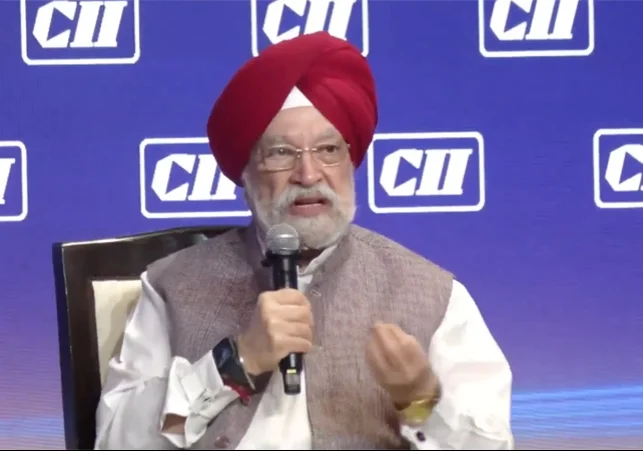
New Delhi: Amid growing speculation and public concern over possible fuel shortages due to global geopolitical tensions, Union Petroleum and Natural Gas Minister Hardeep Singh Puri has assured citizens that India possesses sufficient energy reserves and there is no reason for panic buying or fear regarding fuel availability.
Speaking at the CII Annual Business Summit in New Delhi on Tuesday, the minister emphasized that India’s strategic preparedness and diversified energy management systems have ensured stable fuel availability despite disruptions in global oil markets.
India’s Energy Reserves Secure, Says Minister
Providing details about the country’s current energy stock position, Hardeep Singh Puri stated that India presently has:
- 60 days of crude oil reserves
- 60 days of LNG (Liquefied Natural Gas) backup
- 45 days of LPG (Liquefied Petroleum Gas) stock
The minister clarified that these reserves include both:
- Strategic petroleum reserves stored at facilities in Visakhapatnam, Mangaluru, and Padur
- Commercial stocks maintained by oil marketing companies
He said the combined reserves place India in a “comfortable and secure” position even amid international supply disruptions.
More Read

PM Modi’s Appeal Misinterpreted, Says Puri
The clarification comes after Prime Minister Narendra Modi recently urged citizens to use fuel and natural resources responsibly and adopt public transport wherever possible.
The Prime Minister had encouraged people to prefer:
- Metro services
- Electric buses
- Public transport systems
- Energy-saving practices
However, the appeal reportedly triggered panic among sections of the public, with rumors spreading about a possible shortage of petroleum products.
More Read

Addressing these concerns, Puri said:
“People should listen carefully to the Prime Minister’s message and avoid drawing imaginary conclusions. His appeal was about conservation and efficiency, not shortage.”
The minister reiterated that there is no immediate threat to fuel supply in the country.
Global Oil Prices Surge Due to West Asia Conflict
The ongoing conflict in West Asia has sharply impacted global crude oil prices.
According to the minister:
- Crude oil prices have reportedly risen from around $65 per barrel to nearly $115 per barrel
- The government has attempted to shield consumers from the full impact of rising global prices
As a result, public sector oil companies are reportedly suffering massive financial losses.
Puri stated that:
More Read

- Oil companies are currently losing nearly ₹1,000 crore per day
- The cumulative losses could soon approach ₹1.98 lakh crore
The government is now closely monitoring market conditions and pricing pressures.
Domestic LPG Production Increased Significantly
The minister also highlighted India’s efforts to strengthen domestic energy production amid disruptions around the strategically crucial Hormuz Strait.
India earlier depended heavily on the route for imports:
- About 85% of crude oil imports
- Nearly 60% of LPG imports
To reduce vulnerability, domestic LPG production has reportedly been increased from:
- 36,000 metric tonnes per day
to - 54,000 metric tonnes per day
Officials say this increase is part of India’s broader strategy to improve energy security and reduce dependence on volatile international supply chains.
Fuel Price Hike Possible
Despite government assurances, market analysts believe rising global crude prices and mounting losses of oil companies may eventually result in higher retail fuel prices.
According to industry estimates:
- Petrol and diesel prices could increase by ₹4–5 per litre around May 15
- Domestic LPG cylinder prices may rise by up to ₹50
However, no official announcement regarding a price revision has yet been made.
Government Focused on Stability
The Centre has indicated that it remains committed to ensuring uninterrupted fuel supply while balancing economic pressures caused by global market instability.
Energy experts believe that India’s strategic reserves and expanding domestic production capacity may help cushion short-term shocks, but prolonged geopolitical instability could continue to impact fuel pricing and inflation.