

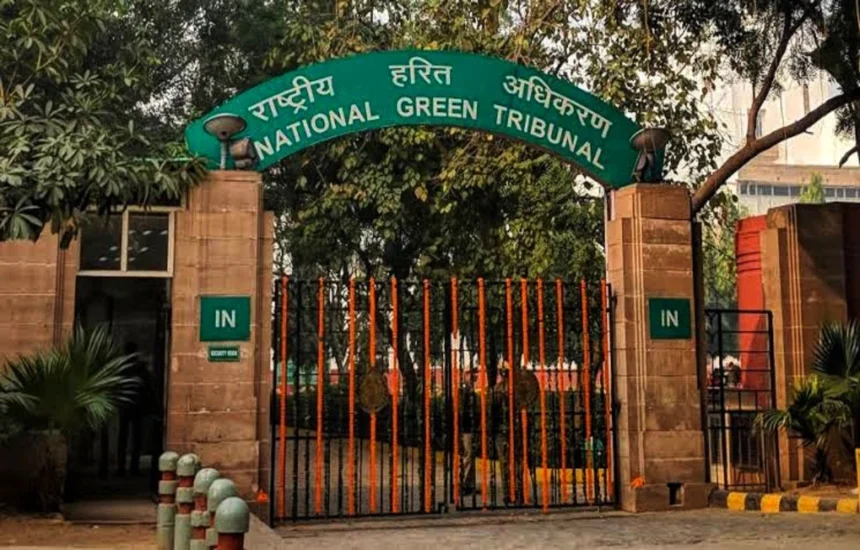
Tribunal Says State Cannot Dilute CGWA Safeguards Amid Growing Groundwater Crisis
Bhopal, May 14, 2026: In a significant ruling with major implications for groundwater governance and environmental regulation, the National Green Tribunal (NGT), Central Zone Bench, Bhopal, has quashed the Rajasthan Government’s groundwater regulation guidelines issued in February 2025. The Tribunal held that the state guidelines were inconsistent with the regulatory framework established by the Central Ground Water Authority (CGWA) and contrary to directions issued by the Supreme Court of India on sustainable groundwater management.
The order was passed in Appeal No. 03/2025(CZ) titled “Tahir Hussain Vs. State of Rajasthan & Others.” The matter was heard by Hon’ble Mr. Justice Sheo Kumar Singh, Judicial Member, and Hon’ble Dr. Afroz Ahmad, Expert Member.
Guidelines Declared Inconsistent with Central Framework
The Tribunal examined the Rajasthan Government notifications dated February 5 and February 10, 2025, relating to groundwater regulation. After reviewing the matter, the Bench concluded that the state-issued guidelines were not in consonance with the framework prescribed by the Central Ground Water Authority under the Environment (Protection) Act, 1986.
The NGT observed that the CGWA’s guidelines were designed to ensure sustainable extraction and management of groundwater resources across the country. Any dilution or deviation from these safeguards by state governments could adversely impact environmental sustainability and water security.
The Tribunal further stated that the Rajasthan guidelines were also inconsistent with the principles laid down by the Supreme Court in the landmark environmental case M.C. Mehta v. Union of India, which emphasized strict regulation of groundwater extraction.
More Read
Groundwater Depletion a Serious National Concern
During the proceedings, the Bench made strong observations regarding the rapidly worsening groundwater situation in India. The Tribunal noted that excessive and unregulated extraction of groundwater has become a major environmental crisis affecting several states, particularly water-stressed regions like Rajasthan.
The order emphasized that illegal extraction of groundwater constitutes a punishable offence under environmental law and that regulatory safeguards cannot be weakened at the state level.
The Bench reiterated that groundwater is a critical natural resource requiring scientific and sustainable management, especially in arid and semi-arid states facing declining water tables.
More Read


CGWA Informed Tribunal of Lack of Consultation
A key aspect of the case was the submission made by the Central Ground Water Authority. During the hearing, the CGWA informed the Tribunal that the Rajasthan Government had issued the impugned guidelines without prior consultation with the Authority and without obtaining mandatory review and acceptance.
The Authority argued that such unilateral changes by states could undermine the national groundwater regulatory framework and create inconsistencies in enforcement mechanisms across the country.
The Tribunal took serious note of this submission while evaluating the legality and validity of the state notifications.
Rajasthan Government Had Already Withdrawn Notifications
During the course of the hearing, the State Government of Rajasthan informed the Tribunal that the disputed groundwater regulation notifications had already been withdrawn.
Taking this submission into consideration, the NGT formally allowed the appeal and quashed the impugned guidelines, effectively nullifying their legal standing.
Legal experts believe the ruling reinforces the supremacy of centrally notified environmental safeguards under the Environment Protection Act and clarifies the limits of state governments in modifying groundwater regulation policies independently.
More Read
Major Implications for Environmental Governance
The judgment is expected to have wider implications for environmental administration and groundwater management policies across India. Experts say the ruling sends a clear message that state governments must align their policies with central environmental regulations and scientific sustainability standards.
Environmental activists and water conservation experts have welcomed the decision, arguing that weakening groundwater safeguards in water-scarce states could accelerate ecological degradation, water scarcity, and desertification.
The ruling is also likely to influence future policy-making regarding industrial water extraction, commercial borewells, urban groundwater usage, and agricultural water management.
Rajasthan Among India’s Most Water-Stressed States
Rajasthan has long faced severe groundwater depletion due to over-extraction for agriculture, industrial use, urban expansion, and declining rainfall patterns. Several districts in the state are categorized as “over-exploited” groundwater zones by national water authorities.
Experts believe strict enforcement of groundwater regulations is essential to protect drinking water security and maintain ecological balance in the region.
The NGT’s decision is therefore being viewed as a landmark intervention in favor of sustainable water governance and environmental accountability.