

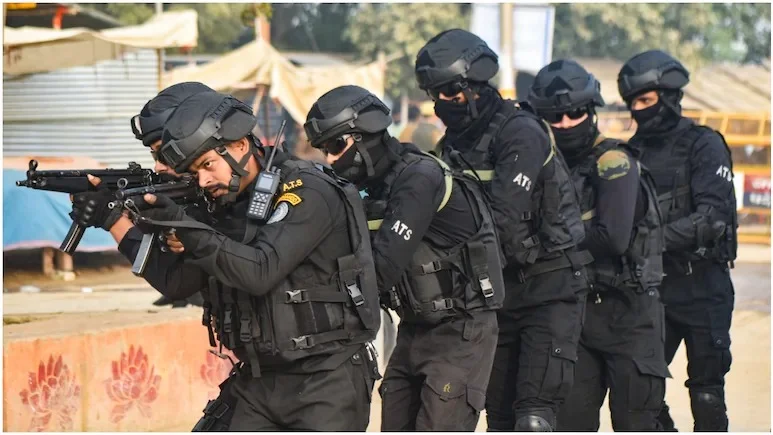
Jaipur: In one of the largest coordinated security operations in recent years, the Rajasthan Anti-Terrorism Squad (ATS) has launched a massive crackdown on a suspected terror-linked espionage and radicalization network operating across the state.
Acting on intelligence inputs received from central intelligence agencies, ATS teams simultaneously conducted raids in 20 districts of Rajasthan on Wednesday. The operation targeted a dangerous “pay-per-task” recruitment model allegedly being operated by Pakistan-based terror operative Shahzad Bhatti, who is believed to have links with Pakistan’s intelligence agency ISI.
During the statewide operation, security agencies detained nearly 60 suspicious youths for questioning. Officials said interrogation is currently underway at undisclosed locations.
‘Pay-Per-Task’ Model Used to Recruit Indian Youth
Preliminary investigation has revealed that the alleged network used a sophisticated online recruitment strategy combining money, digital anonymity, and “gangster glamour” to attract young individuals.
According to intelligence sources, youths were initially assigned small assignments such as:
More Read

- Clicking photographs or videos of government offices
- Recording military or strategic locations
- Sharing sensitive local information
- Monitoring movement around critical infrastructure
In exchange, payments were allegedly transferred directly into their digital wallets or through encrypted online channels.
Investigators believe that once recruits became financially dependent or psychologically influenced, they were gradually introduced to more dangerous tasks, including:
- Weapons handling
- Grenade training
- Surveillance operations
- Potential “target killing” assignments
Security experts say the model resembles a decentralized terror recruitment mechanism designed to avoid early detection.
More Read

Dark Web and Gaming Platforms Used for Secret Communication
One of the most concerning aspects of the investigation is the alleged use of advanced digital concealment methods.
Officials revealed that the suspects avoided normal messaging platforms and instead used:
- Dark web browsers
- Encrypted communication channels
- Auto-delete chat applications
- Private chat rooms inside online gaming servers
Investigators believe these methods were specifically chosen to evade traditional surveillance and digital monitoring systems used by law enforcement agencies.
Cyber forensic teams are now working to recover deleted data and trace communication patterns linked to foreign handlers.
Rajasthan Emerges as Major Focus of Investigation
According to intelligence inputs, nearly 900 youths across India were allegedly in contact with the Pakistan-based network in varying capacities.
Among them, approximately 60 individuals from Rajasthan were identified as the most active or suspicious, leading to the large-scale operation across districts in the state.
More Read

The ATS is currently conducting forensic examination of:
- Mobile phones
- Laptops
- Hard drives
- Digital wallets
- Online gaming accounts
- Cryptocurrency transaction trails
Officials are attempting to determine:
- Whether sensitive information from Rajasthan was transmitted to Pakistan
- If foreign funding was routed through cryptocurrency or digital payment systems
- Whether local handlers or sleeper-cell facilitators were active inside the state
Possible Major Security Threat Averted
Security agencies believe the swift action may have prevented potential terror incidents, espionage activities, or organized attacks planned within Rajasthan or neighboring regions.
Following the initial interrogation of detainees, ATS teams have reportedly expanded search operations to other locations connected to the network.
Sources indicate that further arrests are likely in the coming days, including possible action against local coordinators, financial facilitators, and individuals suspected of providing logistical support.
Growing Concern Over Online Radicalization
The case has once again highlighted the growing challenge of digital radicalization and online recruitment targeting Indian youth through social media influence, gaming platforms, and financial incentives.
Security analysts warn that terror groups and hostile foreign networks are increasingly adopting decentralized digital methods instead of traditional recruitment channels.
The Rajasthan ATS, along with central intelligence agencies, is expected to continue coordinated investigations into the wider national and international links connected to the alleged network.