

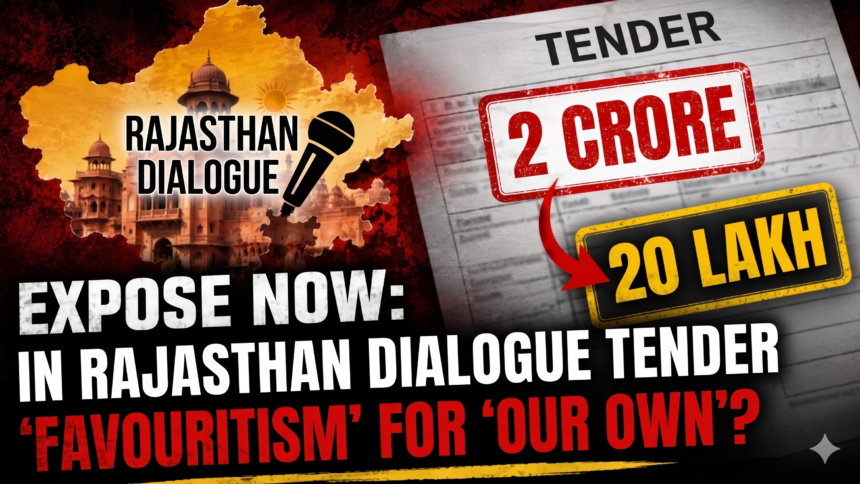
Allegations Surface Over Sudden Reduction in Experience Requirement From ₹2 Crore to ₹20 Lakh
Jaipur: Fresh controversy has erupted in Rajasthan over allegations of irregularities in the tender process related to outdoor media flex banner contracts under the “Rajasthan Samvad” initiative. The matter has triggered political and administrative debate after claims emerged that eligibility conditions in the tender were allegedly diluted to benefit a particular firm linked to influential circles.
The allegations have raised serious questions regarding transparency, fairness, and adherence to procurement norms within the state’s public communication system.
Alleged Favouritism Under Scanner
According to discussions circulating within administrative and political circles, the controversy centers around a firm identified as “Swastik Printers,” which is allegedly linked to the relative of an influential spokesperson.
Critics claim that the original tender conditions were substantially relaxed shortly before the bidding process, allegedly enabling firms with limited experience and financial background to qualify.
While no official confirmation has yet been issued regarding wrongdoing, the changes in eligibility criteria have become a subject of intense scrutiny.
More Read

Major Changes in Tender Conditions Alleged
Sources familiar with the matter allege that key qualification norms were modified in a way that dramatically lowered the entry barrier for participation.
The reported changes include:
- The mandatory prior work experience requirement was allegedly reduced from ₹2 crore to just ₹20 lakh.
- The earlier requirement mandating a minimum three-year experience period was reportedly removed altogether.
Observers argue that such revisions significantly alter the competitive landscape of the tender process and could potentially favor newer or less experienced firms.
More Read

Concerns Over Fair Competition
The controversy has revived broader concerns about public procurement practices and whether government tenders are being structured to ensure fair competition or selectively tailored for preferred entities.
Industry participants claim that experience and turnover requirements exist to ensure quality execution, financial capability, and accountability in public contracts. Sudden relaxation of these norms, they argue, can undermine transparency and discourage established firms from participating.
Questions are also being raised about whether the modifications were approved through due administrative procedure and whether all stakeholders were informed equally.
Shadow of Earlier Tender Controversies
The allegations come at a time when Rajasthan has already witnessed political controversy over procurement-related matters in recent years.
Administrative observers note that earlier investigations and allegations involving public contracts, “pooling” arrangements, and tender manipulation had already placed scrutiny on departmental functioning in certain sectors.
The latest controversy has therefore intensified demands for greater transparency in government contracting processes.
More Read

Calls for High-Level Inquiry
Following the emergence of the allegations, demands are growing for an independent and impartial investigation into the Rajasthan Samvad tender process.
Critics and transparency advocates have called for:
- A detailed review of all modifications made in the tender document,
- Disclosure of the official reasoning behind relaxing eligibility norms,
- Examination of possible links between officials and participating firms,
- And verification of whether procurement guidelines were properly followed.
Some observers have also demanded that the entire tender process be made public to restore confidence in the system.
Government Yet to Issue Detailed Clarification
As of now, there has been no comprehensive official response from the concerned department regarding the allegations or the rationale behind the reported changes in eligibility conditions.
Officials are expected to face increasing pressure to clarify whether the amendments were part of a legitimate policy decision aimed at encouraging wider participation or whether the changes improperly benefited select entities.
The issue is likely to gain further political attention if demands for investigation intensify in the coming days.
At present, the allegations remain subject to official verification, and no judicial or departmental finding has established wrongdoing.